
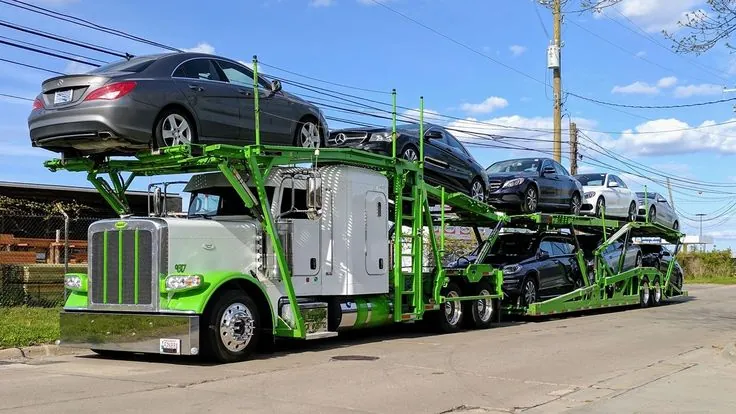
Virginia Auto Transport & Car Shipping
Door-to-door Virginia auto transport on open and enclosed carriers, from the Northern Virginia suburbs and Richmond to Hampton Roads, the Shenandoah Valley and the small towns in between.
Neptune Auto Transport arranges Virginia auto transport and car shipping to and from every part of the state, door to door. We move cars, trucks, SUVs and motorcycles between Virginia and the other 47 contiguous states on open and enclosed carriers, with the carrier’s cargo insurance verified before your vehicle is loaded and one all-inclusive price agreed up front. Whether the car is leaving an Arlington high-rise, a Richmond suburb, a Virginia Beach cul-de-sac or a farm road in the Shenandoah Valley, we arrange pickup as close to the address as a full-size truck can legally and safely reach.
Why Virginia is a busy auto transport state
Virginia’s shipping volume comes from three things that rarely overlap in one state: a federal-government job market in the Washington, D.C. suburbs, a large military presence on the Atlantic coast, and a position roughly halfway down the I-95 corridor that East Coast carriers already drive every week.
- Three interstates carry most of the traffic. I-95 runs the length of eastern Virginia from the D.C. line through Fredericksburg, Richmond and Petersburg. I-64 crosses the middle of the state, tying Hampton Roads to Richmond, Charlottesville and Staunton. I-81 carries the Shenandoah Valley’s freight from Winchester south through Harrisonburg, Staunton, Lexington, Roanoke and Bristol. I-66, I-85, I-77 and the Hampton Roads beltways fill in the rest. A carrier headed almost anywhere on the East Coast is already on one of those roads.
- Northern Virginia turnover. Arlington, Alexandria, Fairfax County and Loudoun County sit inside the Washington, D.C. metro, and federal agencies, contractors and the Pentagon move people in and out on their own timetable rather than a seasonal one. That keeps car transport in and out of Northern Virginia steady year-round.
- Military and federal relocations. Virginia hosts Naval Station Norfolk, Naval Air Station Oceana in Virginia Beach, Joint Base Langley-Eustis in Hampton and Newport News, Marine Corps Base Quantico, Fort Belvoir in Fairfax County, Fort Gregg-Adams near Petersburg and Naval Weapons Station Yorktown. PCS orders and federal transfers generate real car transport demand in every month of the year.
- The seasonal run to Florida. Virginia is far enough north to get a real winter and close enough to I-95 to leave it easily. Southbound volume climbs through October and November, and the same vehicles come back north in March and April.
- College moves. UVA in Charlottesville, Virginia Tech in Blacksburg, James Madison in Harrisonburg, William & Mary in Williamsburg, VCU in Richmond, George Mason in Fairfax and Old Dominion in Norfolk all draw out-of-state students who need a car brought in at the start of a term and taken home at the end.
- The Port of Virginia. Marine terminals in Norfolk, Portsmouth and Newport News keep vehicles moving by road throughout Hampton Roads. Neptune handles the domestic road leg inside the 48 contiguous states; we do not arrange ocean freight or export paperwork.
Auto transport services in Virginia
Neptune is a licensed auto transport broker, MC 1384866 and USDOT 3824247, not a carrier with its own fleet. We dispatch your shipment into a vetted carrier network and look for the truck already running your lane, which is why Virginia’s corridor density matters so much to your price and your pickup date. Every option below includes door-to-door service and verified carrier insurance.
Open carrier transport
Open carrier transport is the right choice for most cars, trucks and SUVs leaving or entering Virginia, and it is what the overwhelming majority of our Virginia customers book. Your vehicle rides on a multi-car open hauler, the same equipment dealerships use to move new inventory. Open trucks are the most common thing on I-95 and I-81, which means the shortest pickup windows and the widest carrier availability in the state.
Enclosed auto transport
Enclosed auto transport puts your vehicle inside a covered trailer, out of weather, road spray and view. It is the standard for classics, exotics, high-value luxury cars and low-clearance vehicles, and it is worth planning ahead for: enclosed trailers are far less numerous than open ones, so dispatch takes longer, particularly for pickups off the main corridors. Height-restricted tunnel crossings in Hampton Roads are another reason enclosed moves there need a little more routing thought.
Door-to-door pickup and delivery
Door-to-door auto transport means we come to you on both ends. In practice a 75-foot carrier cannot always reach the door, and that is far more common in Virginia than most states: Arlington and Alexandria townhouse rows, Fairfax garden-apartment complexes with low garage clearances, gated communities with posted truck restrictions, and one-lane roads in the Blue Ridge foothills. When that happens the driver arranges a short meet nearby, usually a shopping-center lot on a main road, at no additional cost.
Expedited auto transport
When a report date, a closing or a job start will not move, expedited auto transport puts your shipment at the front of the dispatch queue instead of waiting for the best-priced truck. It carries a premium, and it is most useful out of the I-95 metros where carrier density gives us something to work with on short notice.
Military PCS vehicle shipping
Virginia car transport for a PCS move has its own rhythm, and we schedule around it: report dates, deployment windows, and vehicles that need to be released or received by an authorized adult after the service member has already flown out. Military vehicle transport includes a military discount, applied to your all-inclusive price when you mention your service at quote time. Pickup near Quantico, Fort Belvoir, Langley-Eustis, Oceana or Naval Station Norfolk is normally arranged at a public location off base rather than at a gate. Our military PCS car shipping guide walks through the paperwork side.
Student, seasonal and specialty moves
We also handle the Virginia moves that repeat every year: college student car shipping to and from Charlottesville, Blacksburg, Harrisonburg and Williamsburg on the academic calendar, snowbird auto transport down the I-95 corridor each fall, motorcycle shipping, classic car transport and heavy equipment hauling. Long-distance moves out of Virginia to the West Coast run as cross-country auto transport, and the full list is on our domestic auto shipping page.
Auto transport across Virginia’s major regions
Virginia does not ship like one market. A car leaving Arlington, a car leaving Norfolk and a car leaving a county road outside Lexington involve three different sets of constraints, and knowing which one you are in tells you most of what you need to know about your pickup window.
Northern Virginia
Arlington, Alexandria, Fairfax and Loudoun are part of the D.C. metro and behave like a dense city rather than like the rest of the state. Townhouse rows, structured parking with low clearances, HOA rules and streets with posted truck restrictions mean the carrier frequently cannot stop at your door, so plan on a nearby meet. The trade-off is worth it: I-95, I-66 and I-495 put Northern Virginia on the route of nearly every Northeast carrier, so pickup windows here are among the shortest anywhere in Virginia. Arlington auto transport is our busiest Northern Virginia market.
Richmond and Central Virginia
Richmond sits where I-95 and I-64 cross, which makes it the easiest place in the state to get a truck in and out of. Carriers running the East Coast north-south lanes and the Hampton Roads-to-Midwest east-west lanes both pass through, so Richmond car shipping normally offers the widest choice of carriers in Virginia, and that competition tends to show up in the price. Petersburg, Colonial Heights and Chesterfield share that access, and I-85 drops south from Petersburg toward the Carolinas and Atlanta. Charlottesville, an hour northwest on I-64, is well served in term-start and term-end weeks and quieter in between.
Hampton Roads
Norfolk, Virginia Beach, Chesapeake, Newport News, Hampton, Portsmouth and Suffolk form one metro split by water. Traffic between the Southside and the Peninsula funnels through the Hampton Roads Bridge-Tunnel and the Monitor-Merrimac Memorial Bridge-Tunnel, both of which back up and both of which carry height and hazmat restrictions that matter for tall enclosed trailers. Drivers plan around the crossings, and a pickup on the far side of a tunnel is often set for early morning to avoid losing an hour in traffic. Virginia Beach auto transport is the largest of these markets, and Norfolk shipments are frequently military moves handled at a public location near the base.
The Shenandoah Valley and the I-81 corridor
I-81 runs the length of the valley from Winchester through Harrisonburg, Staunton and Lexington to Roanoke, and it is one of the heaviest freight corridors in the East. That density is good news for pickups in valley towns, which are far easier to serve than their population suggests, because a truck is usually already passing. Winter is the caveat: snow and ice slow or close I-81 a few times in most seasons, and the mountain side roads off the interstate can stay bad for a day or two after the highway itself clears.
Southwest and rural Virginia
Roanoke, Blacksburg, Lynchburg, Bristol and the counties around them are served off I-81 and I-77. Carrier volume is thinner than in the I-95 corridor, so pickup windows here typically run a day or two longer, and a flexible pickup date does more for your price than any other single factor. The same applies to the Northern Neck, the Eastern Shore beyond the Chesapeake Bay Bridge-Tunnel and the farm country south of Route 460. We serve all of it. It is a matter of matching your move to a truck already heading that way.
Cities we serve in Virginia
These Virginia city markets have their own page, with the neighborhood access detail, local demand drivers and route links that apply there. Every other community in the state is covered from the same carrier network.
Virginia Beach auto transport covers the largest city in the state, where the I-264 spur ends and summer congestion at the Oceanfront shapes every pickup. Richmond car shipping sits at the I-95 and I-64 crossing, which makes it the easiest place in Virginia to get a truck in and out of. Arlington vehicle shipping deals with the dense Northern Virginia reality: high-rise garages, permit parking, and a parkway that bars commercial vehicles outright.
Across Hampton Roads we cover Norfolk auto transport, Chesapeake car shipping, Portsmouth vehicle shipping and the Peninsula through Newport News and Hampton. In Northern Virginia, Alexandria auto transport sits alongside Arlington, with Fredericksburg car shipping halfway down the I-95 corridor. Inland, Charlottesville works off I-64 and Roanoke auto transport off the I-81 spur. Suffolk, Fairfax, Lynchburg, Harrisonburg and every other community are covered from the same carrier network.
Nationwide transport for every kind of vehicle
Whatever you drive and wherever it needs to go, Neptune has a shipping solution built for it. Explore our most-requested services.
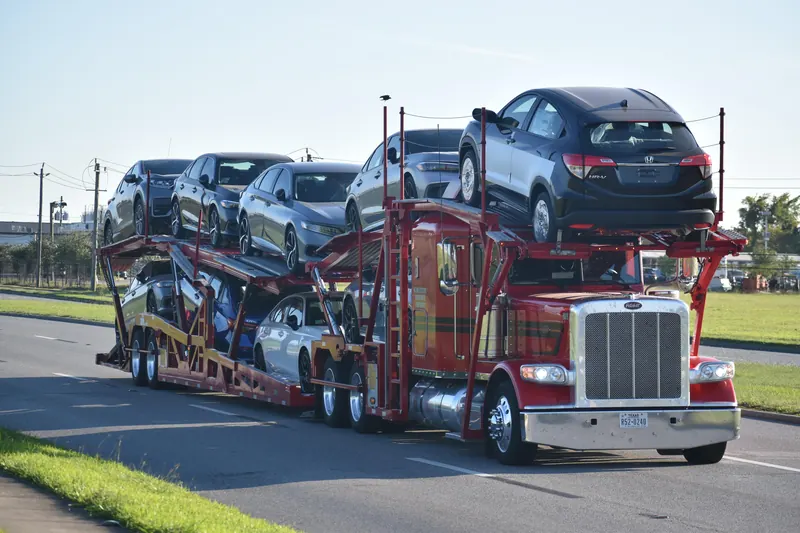
Open Carrier Transport
Our most popular and affordable way to ship: your vehicle travels on a professional open auto carrier.
Learn more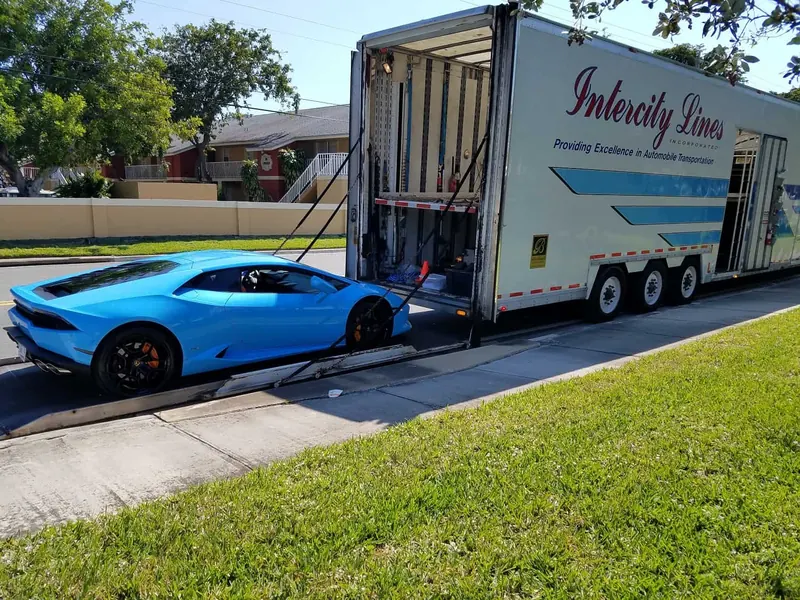
Enclosed Auto Transport
Fully covered protection from weather and road debris, ideal for luxury, exotic and classic cars.
Learn more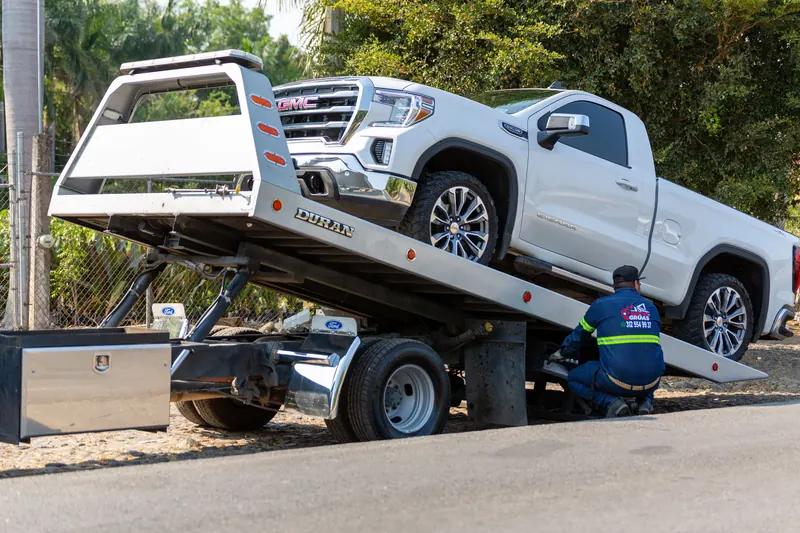
Door-to-Door Service
We pick up and deliver as close to your address as safely possible, on both ends of the move.
Learn more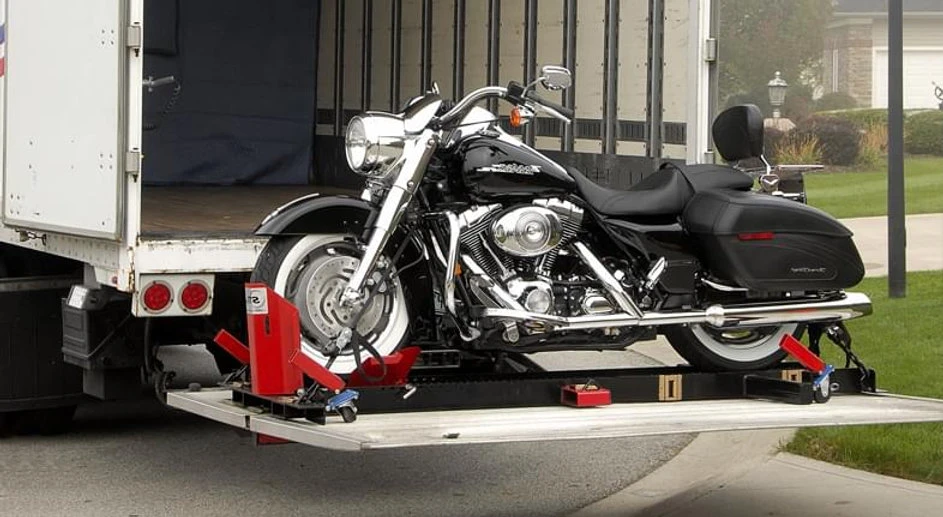
Motorcycle Shipping
Specialized crating, soft-strapping and secure handling for bikes of every make and model.
Learn more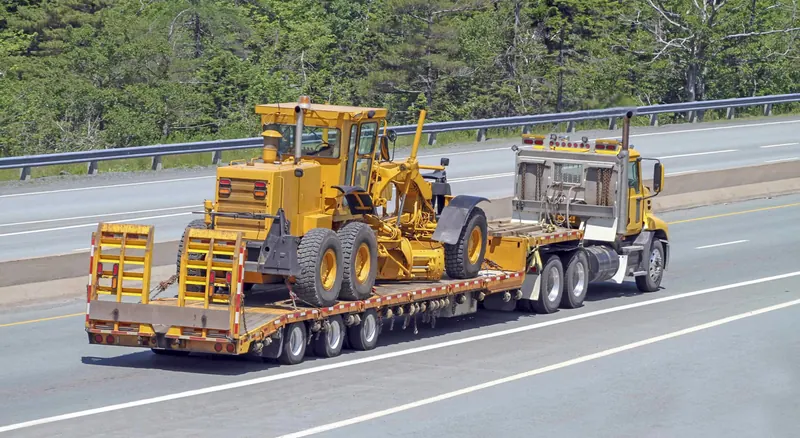
Heavy Equipment Hauling
Flatbed and lowboy transport for construction machinery, tractors and oversized loads.
Learn more
Luxury & Exotic Transport
White-glove, climate-controlled enclosed shipping with extra care for high-value vehicles.
Learn morePopular Virginia auto transport routes
Virginia sits on lanes that carriers run constantly, and those are the moves that get picked up soonest and priced most sharply. Southbound to Florida is the strongest by a wide margin; the Carolinas, Midwest and Northeast lanes run steadily in both directions all year. Distances below are approximate driving miles, and transit figures are typical estimates once the vehicle is loaded, not guaranteed delivery dates.
- Virginia to Florida. Straight down I-95, and our highest-volume Virginia lane. Richmond to Orlando is roughly 780 miles and typically 2–4 days; Norfolk to Miami is about 950 miles and 3–5 days. Demand peaks southbound in October and November and northbound in March and April. Full detail is on our Virginia to Florida auto transport page, and Florida auto transport covers the destination side.
- Virginia to North Carolina. The shortest of the busy lanes: Richmond to Raleigh is about 170 miles, Virginia Beach to Charlotte about 320. Short hauls carry a higher cost per mile than long ones, and carriers usually prefer to fold them into a longer run, so a flexible pickup window matters more here than on any other Virginia route. See North Carolina auto transport.
- Virginia to Ohio, and Ohio to Virginia. Two ways across the mountains: I-64 west through Charleston to I-77, or north on I-81 to I-70. Richmond to Columbus is roughly 470 miles and 2–3 days; Norfolk to Cleveland is about 540 miles and 2–4 days. Winter weather in the Appalachians is the main variable on this lane. See Ohio auto transport.
- Virginia to Illinois, and Illinois to Virginia. Arlington to Chicago is about 700 miles and typically 2–4 days; from Richmond it is closer to 790. Corporate relocations and university moves keep this one busy in both directions year-round. See Illinois auto transport.
- Virginia to Pennsylvania. Short, dense and well covered. Richmond to Philadelphia is roughly 250 miles and usually 1–2 days; Northern Virginia to Pittsburgh is about 240 miles over the Alleghenies. See Pennsylvania auto transport.
- Georgia to Virginia. I-85 through the Carolinas. Atlanta to Richmond is about 530 miles and typically 2–3 days; Roanoke to Atlanta runs closer to 460 miles on I-81 and I-77. See Georgia auto transport.
- Virginia and the Northeast. Richmond to Newark is about 300 miles and Richmond to Boston about 550, all on the I-95 spine, which is why these are some of the quickest pickups we book. Our New Jersey to Virginia auto transport page covers the inbound leg; see also New Jersey, New York and Maryland auto transport.
- Virginia to the West Coast. Richmond to Los Angeles is roughly 2,650 miles and generally 7–10 days in transit. These run as cross-country auto transport, and booking a week or more ahead makes a real difference to both price and pickup date.
Virginia route pages
Dedicated pages for the Virginia lanes with the most search demand, each with the corridor, the seasonality and the access detail for both ends. Other Virginia routes are quoted the same way, so ask your specialist for the city pair you need.
How long does Virginia car shipping take?
Transit time is driven by distance first, then by how much traffic a lane already carries. Beyond that, weather, I-95 congestion between Washington and Fredericksburg, seasonal demand, the vehicle itself and how far each address sits from a main highway all shift the number. The table below shows typical estimates once your vehicle is loaded, and does not include the dispatch window before pickup, which is usually 1–5 days in the I-95 corridor and longer in rural Southwest Virginia.
| Route | Distance | Estimated Transit |
|---|---|---|
| Richmond → Orlando, FL | ~780 mi | 2–4 days |
| Norfolk → Miami, FL | ~950 mi | 3–5 days |
| Richmond → Raleigh, NC | ~170 mi | 1–2 days |
| Virginia Beach → Charlotte, NC | ~320 mi | 1–3 days |
| Richmond → Columbus, OH | ~470 mi | 2–3 days |
| Norfolk → Cleveland, OH | ~540 mi | 2–4 days |
| Arlington → Chicago, IL | ~700 mi | 2–4 days |
| Richmond → Philadelphia, PA | ~250 mi | 1–2 days |
| Roanoke → Atlanta, GA | ~460 mi | 2–3 days |
| Richmond → Los Angeles, CA | ~2,650 mi | 7–10 days |
Typical planning windows for these corridors based on standard carrier scheduling. They are not measured Neptune averages, and they are not guaranteed delivery dates. Your specialist will give you a realistic window for your specific addresses and dates. More detail: how long it takes to ship a car.
How much does it cost to ship a car to or from Virginia?
We do not publish a flat Virginia rate, because one number would be wrong for most of the people reading it. What we can do is tell you exactly what moves your price, so the quote you get makes sense before you book:
- Distance and lane density. Longer moves cost more in total but less per mile. Just as important is how much traffic the lane already carries: a Richmond-to-Orlando run competes against dozens of trucks already going that way, while a Bristol-to-northern-Maine move has to be built from scratch.
- Open or enclosed. Enclosed transport costs substantially more than open, because the trailer holds fewer vehicles, the equipment is scarcer and the insurance requirements are higher. For a standard daily driver, open is the sensible default. Open vs enclosed lays out the trade-off.
- Vehicle size, weight and condition. A crew-cab pickup or a three-row SUV takes more deck space and more weight than a sedan. An inoperable vehicle needs a winch and a driver equipped for it, which narrows the pool of trucks that can take the job. Declare both accurately at quote time so the price does not change at pickup.
- Pickup and delivery access. A Northern Virginia townhouse block, a gated Hampton Roads community or a one-lane mountain road all take the driver longer than a suburban driveway on a wide street. Addresses well off a main corridor also mean the carrier is driving deadhead miles to reach you.
- Timing and season. Southbound rates on the Virginia-to-Florida corridor firm up through October and November, and the northbound leg does the same in early spring. A flexible pickup window of a few days is the cheapest concession you can make.
- Fuel and carrier availability. Diesel prices flow directly into carrier rates, and so does how many trucks happen to be in your area that week. Both are why an honest quote is route-specific and time-specific rather than a fixed table.
- Expedited service. Priority dispatch buys you a faster pickup and costs a premium over standard scheduling.
Our quotes are all-inclusive, so the figure you are given covers door-to-door transport and the carrier’s cargo insurance with no fuel surcharge or broker fee added later. A reservation fee is collected only after a driver has actually been assigned to your shipment, and the balance is paid to the driver at delivery. For the wider picture, see how much it costs to ship a car and understanding your auto transport quote, or request a free Virginia quote.
Choosing an auto transport company in Virginia
Most car transport companies in Virginia, including this one, are brokers rather than carriers: they hold the customer relationship, vet the trucking companies and dispatch your vehicle to one of them. That is normal and it is how the industry works, but it means the things worth checking are licensing and transparency, not fleet photos. Verify the MC and USDOT numbers of anyone you are considering; ours are MC 1384866 and USDOT 3824247. Ask whether the quote is all-inclusive or whether a fuel surcharge appears later. Ask when money is actually collected. Ask for the carrier’s cargo insurance to be confirmed before loading, and read the bill of lading at pickup and delivery, since it is the document that decides any damage claim. How to choose an auto transport company goes through the rest, and how car shipping works walks the process end to end. Our own guide to insurance during transport explains what the carrier’s policy does and does not cover.
We also ship to neighboring states
Virginia auto transport FAQs
Ship your car to or from Virginia
Get a free, all-inclusive Virginia auto transport quote.