
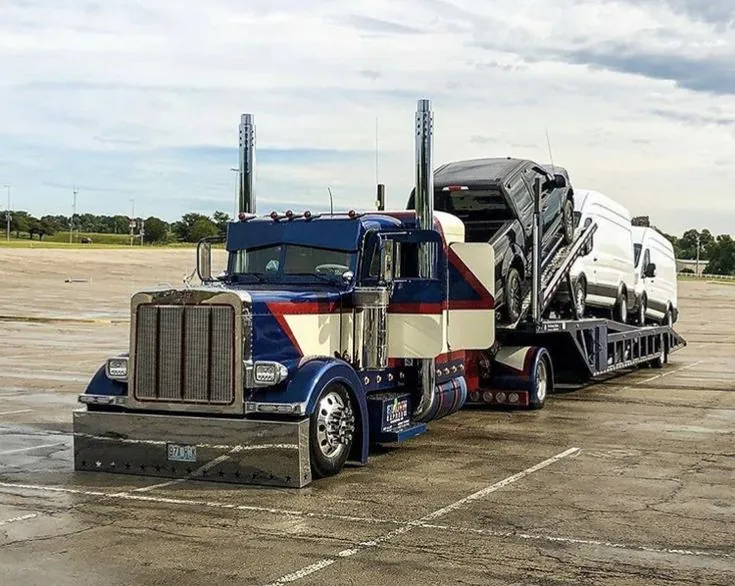
The planning errors that cost service members the most time on a PCS: booking a leg the government was going to cover, leaving it too late in peak season, and handing the driver a car packed with things they cannot legally carry.
Car shipping built around your orders
A permanent change of station is demanding enough without worrying about your vehicle. PCS timing is unpredictable, so the key is a transporter that builds in flexibility and communicates clearly.
Neptune ships vehicles for active-duty members, veterans, reservists and families nationwide, coordinating around report dates and shifting plans.
CONUS moves, OCONUS moves, and which part we handle
The single most common planning mistake on a PCS is treating the vehicle as one shipment when it is often two.
A CONUS move, station to station inside the continental United States, is a straightforward door-to-door job. We arrange it end to end across the 48 contiguous states, from a Fort Bragg address to a Joint Base Lewis-McChord address without you touching the wheel.
An OCONUS move is different. The ocean leg to Germany, Japan, Korea, Alaska or Hawaii is handled through the government process, and the vehicle is turned in at a Vehicle Processing Center rather than handed to a commercial carrier. What we handle is the domestic leg on either side: getting the car from your current address to the VPC or port before you turn it in, and collecting it from the VPC when it lands stateside and running it to wherever you are stationed next. Neptune does not ship overseas, to Alaska or to Hawaii, so if a company tells you it will handle your whole OCONUS move door to door, ask exactly which legs it means.
Getting this wrong costs time rather than money. People book a commercial carrier for a leg the government was going to cover, or leave the stateside pickup unarranged and pay storage at the port while they sort it out.
PCS season is the timing problem
Roughly May through August is peak PCS season, when the bulk of military moves happen because families move between school years. Everything tightens in that window: carriers, trucks and dates.
What that means practically is lead time. Outside the season, a week or two of notice is usually comfortable. Inside it, book as far ahead as your orders allow, and treat two to three weeks as the target rather than the minimum. If your report date lands in June or July and you wait until the week before, you are competing with every other family on the same calendar, and the flexible-dates discount you would otherwise get disappears because there is nothing flexible left.
Orders move, which is the other half of this. Tell your specialist early if the report date shifts. Re-coordinating a booked shipment is normal and usually free; rebooking from scratch in the middle of July is neither. If the timeline collapses entirely, expedited auto transport narrows the pickup window, at a premium.
Mistakes worth avoiding
- Packing the car like a moving container. Carriers are licensed to move vehicles, not household goods, and your belongings are not covered by the carrier's cargo insurance. The limits are real and the driver can refuse the load at the curb. See what you can pack inside your car.
- Assuming base access. A full-size carrier often cannot get through the gate, and the driver may not have base access at all. Plan a meeting point just outside, a commissary lot or a wide commercial street, and confirm it when you book rather than on the day.
- Nobody available at delivery. If you fly out before the car arrives, authorize another adult in writing to accept it and sign the Bill of Lading. An unclaimed vehicle accrues storage.
- Losing the paperwork. Keep the condition report, the Bill of Lading and the receipts together. They are what any reimbursement claim and any damage claim both run on.
- Not saying it is a PCS. Timing flexibility, base-adjacent pickup and multiple vehicles for one family are all normal on these moves, and they change how the shipment gets planned.
Two vehicles, one family
Sending a second car is common on a PCS and it is worth asking about together rather than as two separate bookings. Two vehicles moving on the same lane on the same dates can often ride the same carrier, which is simpler to coordinate and usually prices better than two independent shipments. Our military vehicle transport page covers how these moves are put together.
Flexible timing and expedited options
Because orders change, look for a transporter that can adjust pickup windows and re-coordinate without penalty wherever possible. For tight timelines or a quick report date, expedited transport gets your vehicle moving on a priority basis.
If you are deploying, you can ship a vehicle ahead of time and coordinate timing around your plans.
Base delivery and multiple vehicles
Delivery to and from installations is routine. In most cases you get door-to-door service to your residence; where base access requires it, the driver arranges a convenient nearby meeting point. Shipping more than one family vehicle? They can often be coordinated together.
Request a quote, mention your service, and let Neptune handle getting your vehicle to your next station.
Discounts and honest pricing
Many transporters, Neptune included, offer a military discount as a thank-you for your service. Combined with transparent, all-inclusive pricing, that means a fair rate with no hidden fees. Mention your service when you request a quote.
Keep your paperwork, condition reports and the Bill of Lading, for any applicable reimbursement.