
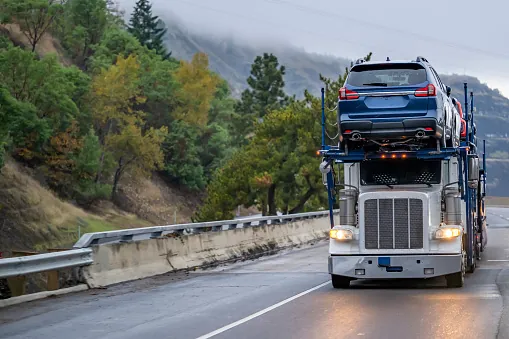
Chicago Car Shipping & Auto Transport
Door-to-door car shipping to and from Chicago, open or enclosed, carrier insured. We work the whole metro, from the Loop and the neighborhoods to the collar counties, and connect Chicago with all 48 contiguous states.
Chicago is the easiest large city in America to find a truck for, and one of the harder ones to actually load in. Carrier traffic through the metro is constant, so a Chicago vehicle rarely waits long for capacity. The real work is on the street: knowing where a 75 to 80 foot carrier can pull up, where it cannot, and where the driver will ask to meet you instead. This page is about that half of the job.
Where a car carrier can reach you in Chicago, and where it cannot
An auto carrier is a semi truck. Loaded, it runs roughly 75 to 80 feet long, about 13 and a half feet tall, and it needs a straight run of clear curb plus room to lower a ramp. That single fact explains almost every question people have about Chicago pickup.
Neighborhoods where a meeting point is the norm. Lincoln Park, Lakeview, Wicker Park, Bucktown, Logan Square, Ukrainian Village, Pilsen and much of the North and Northwest Side are permit-parking blocks with parked cars on both sides, narrow one-way streets and alley-only garage access. There is no legal or physical way to bring a full-size carrier down most of them. The driver will arrange to meet you nearby, usually a large retail parking lot with a clear entrance close to an expressway ramp. You drive ten minutes, hand over the keys, and the inspection and paperwork happen there exactly as they would at your door.
Downtown, the Loop, River North, Streeterville and the South Loop. High-rise buildings, loading docks with height limits and metered or restricted curb make a curbside load unrealistic in most cases. If your car lives in a building garage, the practical approach is to drive it out to an agreed meeting point, or to arrange the handover on a wider side street at a quiet hour. Tell your specialist which building you are in when you book, because that changes the plan.
Bungalow belt and outer neighborhoods. Portage Park, Jefferson Park, Norwood Park, Beverly, Mount Greenwood, Garfield Ridge, Ashburn and similar areas often work fine. Wider streets, driveways and less parking pressure mean a carrier can frequently get close to the address.
Suburbs and the collar counties. Evanston, Skokie, Oak Park, Cicero, Schaumburg, Arlington Heights, Des Plaines, Naperville, Orland Park, Tinley Park and the rest are usually straightforward door-to-door territory. Driveways and wide streets are the norm and the carrier can reach the address itself.
A meeting point is not a downgrade or a hidden fee. It is what door-to-door means in a dense city, and it is the same arrangement carriers use in New York and San Francisco. Nothing about your price, your insurance or your paperwork changes.
Chicago winter, and what it actually does to a shipment
From December through March, three things change and it is worth planning around them.
First, storms close roads. Lake-effect snow and ice can shut sections of I-80, I-90 and I-57 with little notice, and a loaded carrier waits rather than running it. That is the most common reason a Midwest delivery window slips, and it is the right call every time.
Second, the street gets narrower. Snow piled along the curb takes a full lane out of an already tight residential street, and a block that a carrier could work in September is impossible in January. Expect more meeting points in winter than in summer, including in neighborhoods where the driver would normally come to the door.
Third, road salt. Illinois salts heavily and it gets on everything moving through the region on an open carrier. For a daily driver that is the same exposure it would have if you drove the route yourself. For a classic, a restored car or anything with fresh paint or exposed chrome, enclosed transport between December and March is a genuinely different product, not an upsell.
Why people ship cars to and from Chicago
- Relocations, in both directions. Corporate moves in and out of the Loop and the West Loop, plus the steady flow of people leaving winter for Florida, Arizona and Texas. If you are flying and shipping the car rather than driving it, tell us your flight date and we will work the pickup backward from it.
- Cars bought out of state. Online purchases, dealer trades and private sales, where the vehicle needs to reach a Chicago address from anywhere in the country. We can pick up from a seller who is not you, as long as someone is there to release the vehicle and sign the inspection.
- Auction and dealer volume. The Chicago area is one of the country's larger wholesale and salvage auction markets. We move those cars out to buyers nationwide, including non-running lots on winch-equipped carriers. Bring the buyer number, the gate pass and the lot's release hours. See dealer and auction transport.
- Students. Northwestern in Evanston, the University of Chicago in Hyde Park, UIC, DePaul, Loyola and IIT all move on the academic calendar, which means August and late May are the crowded weeks. Booking two to three weeks out matters more then than at any other time of year. See college student car shipping.
- Military moves. Naval Station Great Lakes in North Chicago generates steady traffic, and PCS dates rarely line up neatly with carrier schedules. A military discount applies. See military vehicle transport.
- Collector and high-value cars. Chicago has a large collector community and a show season that runs spring through fall. Enclosed transport with soft straps and lift-gate loading is the standard for those moves. See luxury and exotic transport and classic car transport.
How pickup and delivery actually work here
Once you book, we dispatch to a vetted carrier already running or heading to the Chicago area. The driver calls you directly, usually the day before, to confirm timing and to sort out the location. That call is when the meeting-point question gets settled, and it is worth taking rather than letting it go to voicemail, because the driver knows what his truck can do on your block better than anyone.
At pickup you walk the vehicle with the driver and complete a joint inspection on the Bill of Lading, which is your record of the vehicle's condition at handover. The same inspection happens at delivery. Keep both copies. Personal items are not covered by carrier cargo insurance, so travel light: most drivers will accept a small amount of weight in the trunk, but the vehicle should not be loaded up.
On timing, there are two clocks. The pickup window from booking to a driver arriving is typically 2 to 5 business days on standard service, and Chicago usually sits at the short end of that because of how much traffic passes through. Transit starts once the car is loaded, at roughly 400 miles a day. If you need a fixed date, that is what expedited transport is for.
Chicago lanes we run most
Chicago sits where I-90, I-94, I-55 and I-290 converge, with I-294 and I-355 ringing the metro and I-80 running just south through Joliet. That geometry puts the city on almost every long-haul lane in the country. The corridors we are asked about most:
- Chicago to California and back, straight out I-80, roughly 5 to 8 days in transit. See Illinois to California and California to Illinois.
- Chicago to Florida, the seasonal lane, about 3 to 5 days, busiest October to December southbound and March to May northbound. See Illinois to Florida and Florida to Illinois for the trip home.
- Chicago to New York and New Jersey, about 2 to 4 days on I-80. See Illinois to New York, New York to Illinois and New Jersey to Illinois.
- Chicago to Virginia and the Mid-Atlantic, carrying relocations and military moves. See Illinois to Virginia.
- Regional Midwest, to Indianapolis, Detroit, Milwaukee, St. Louis and Columbus, usually 1 to 2 days on the road.
For a full picture of statewide coverage, corridors and the registration rules that apply once your car arrives, see our Illinois auto transport page. To price your exact move, request a free quote or work through the car shipping cost calculator first.
One thing worth knowing before you book with anyone in this market: Neptune is a broker, not a carrier. We do not own trucks or employ drivers. We arrange your shipment and dispatch it to a vetted carrier that owns the equipment, operating under USDOT 3824247 and MC 1384866. Take those numbers to the FMCSA SAFER database and confirm the authority is active before you pay a deposit to us or to anyone else.
Nationwide transport for every kind of vehicle
Whatever you drive and wherever it needs to go, Neptune has a shipping solution built for it. Explore our most-requested services.
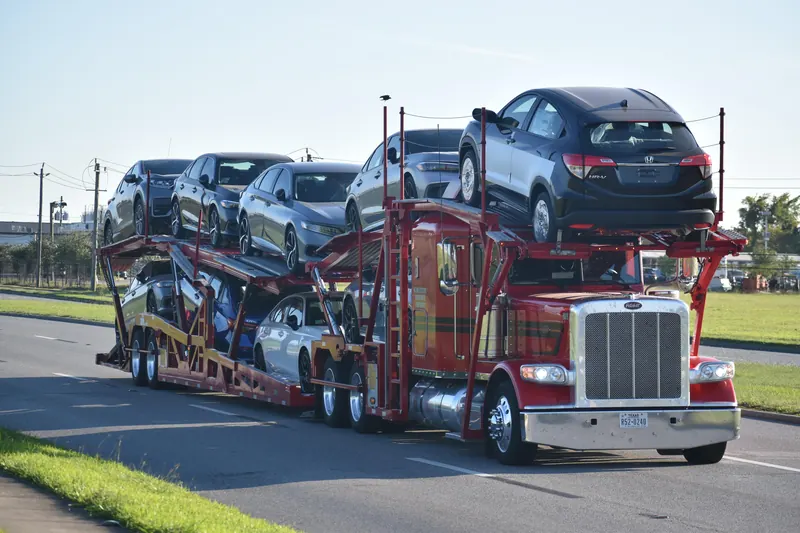
Open Carrier Transport
Our most popular and affordable way to ship: your vehicle travels on a professional open auto carrier.
Learn more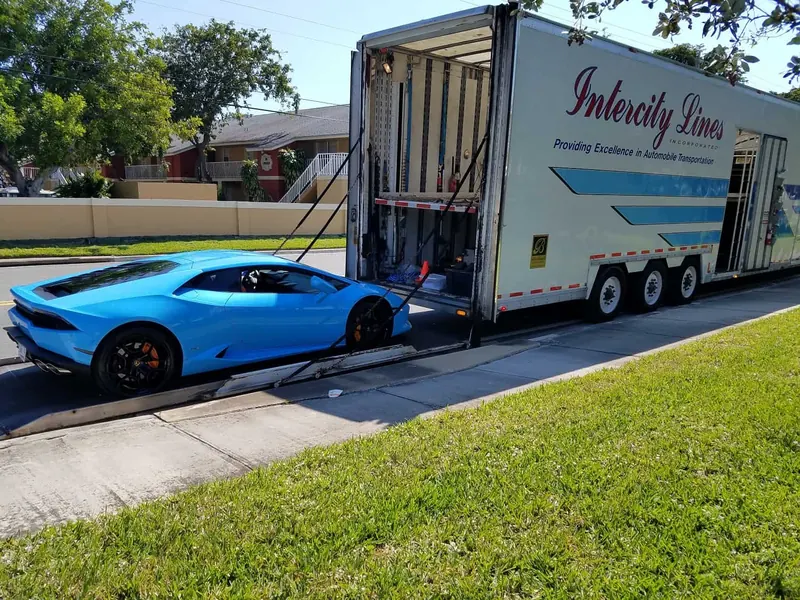
Enclosed Auto Transport
Fully covered protection from weather and road debris, ideal for luxury, exotic and classic cars.
Learn more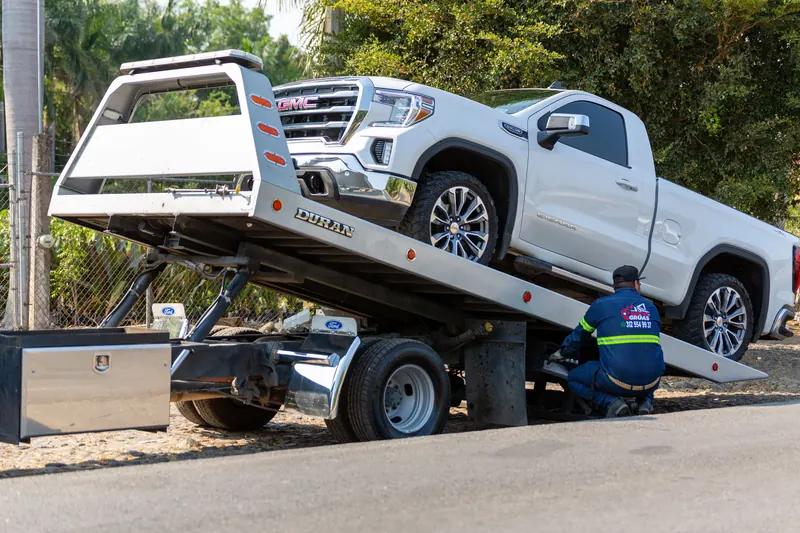
Door-to-Door Service
We pick up and deliver as close to your address as safely possible, on both ends of the move.
Learn more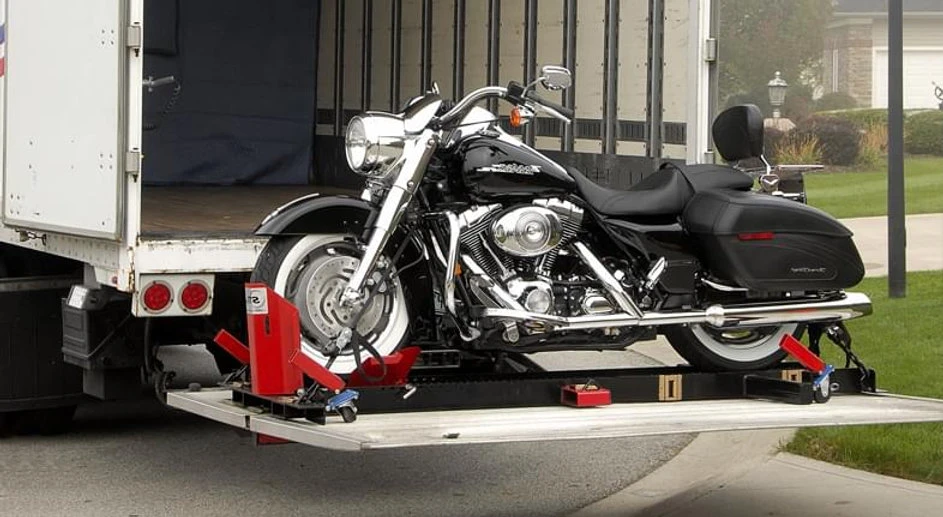
Motorcycle Shipping
Specialized crating, soft-strapping and secure handling for bikes of every make and model.
Learn more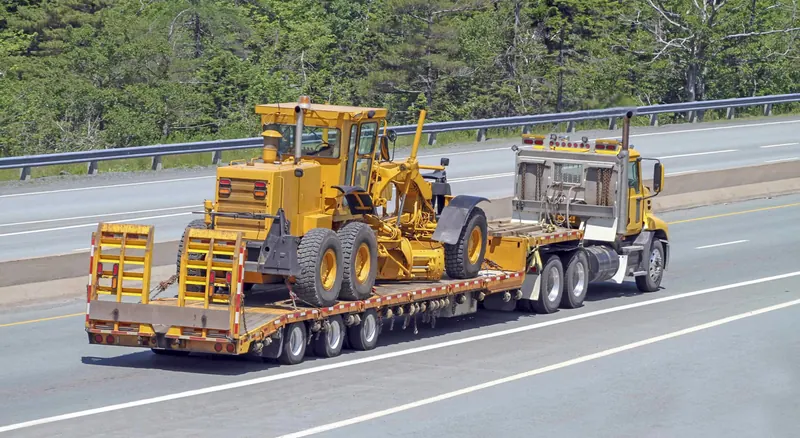
Heavy Equipment Hauling
Flatbed and lowboy transport for construction machinery, tractors and oversized loads.
Learn more
Luxury & Exotic Transport
White-glove, climate-controlled enclosed shipping with extra care for high-value vehicles.
Learn moreAuto transport across Illinois
Chicago is one of many communities we serve in Illinois. See our full Illinois auto transport page for statewide details and routes.
Other cities we serve in Illinois
Popular Illinois shipping routes
Chicago car shipping, frequently asked questions
Ship your car to or from Chicago
Get a free Chicago, IL auto transport quote.