
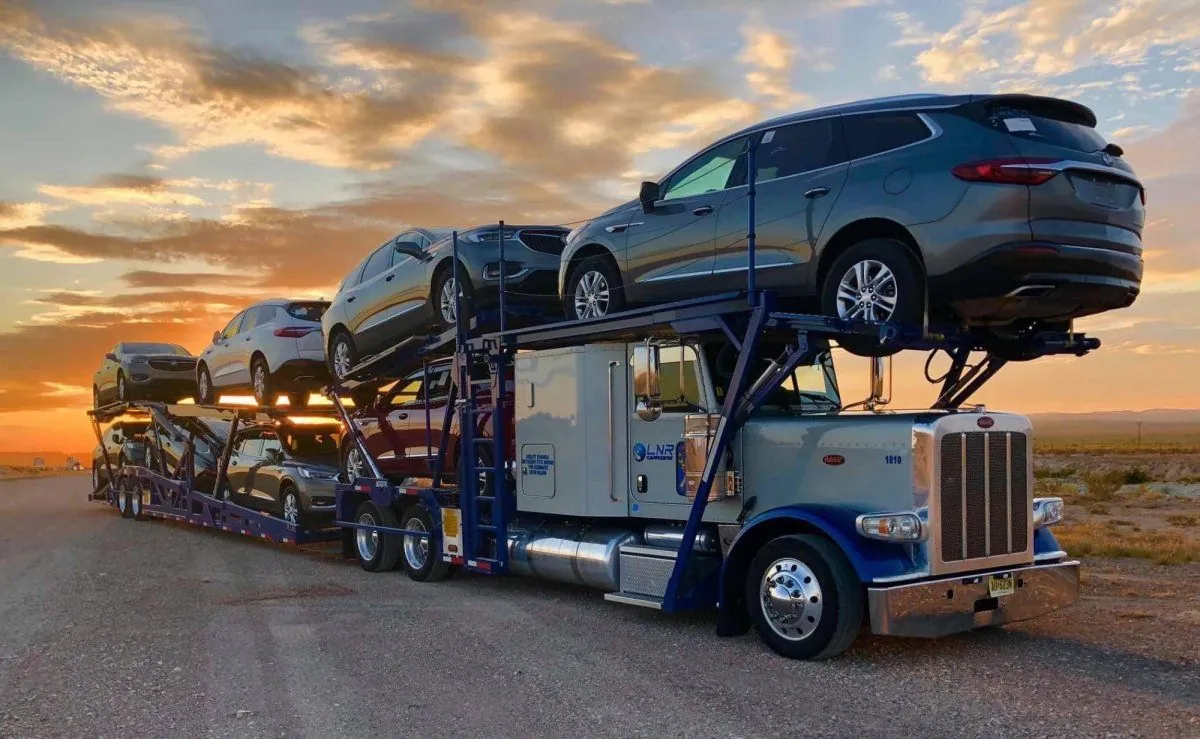
Florida to Illinois Auto Transport
Reliable, insured, door-to-door car shipping from Florida to Illinois. About 3 to 5 days in transit once loaded, plus a 2 to 5 business day pickup window.
Florida to Illinois is the return half of the Midwest snowbird migration, and it behaves nothing like the trip down. Different season, different pickup problem, and usually a vehicle that has not moved in months. This page is about the northbound leg specifically.
The Florida to Illinois route at a glance
Depending on where in Florida you start, the run is roughly 1,200 to 1,400 miles. From the peninsula it is Interstate 75 north through Georgia, Tennessee and Kentucky, picking up Interstate 65 toward Indianapolis and on into Chicagoland. Origins on the east coast, from Miami up through Palm Beach and Jacksonville, often run I-95 first and cut west. Panhandle pickups sit on I-10 and route differently again.
It is a high-volume corridor in both directions, which is the main thing working in your favor. Carriers are running it constantly, so a Florida vehicle is rarely waiting on a truck that has to be routed specially.
How long does the Florida to Illinois route take?
Two separate figures decide when your car arrives. Once it is loaded, budget roughly 3 to 5 days in transit: a driver covers about 400 miles on a typical day, because federal hours-of-service rules cap driving time and a loaded carrier is slower than a car. Before any of that, a standard pickup window of 2 to 5 business days runs from booking to collection.
Your delivery date is the pickup date plus the transit days, which is why we quote the two separately. The transit clock starts when the car is loaded, not when you book, so a collection at the later end of its window moves the arrival with it. Where your vehicle sits in the truck's drop order can shift it further, so we give a delivery window rather than a fixed date. If your dates are firm, ask about expedited service to tighten the pickup end.
Open or enclosed heading north
Most vehicles travel this lane on affordable open carriers, and the northbound trip in spring is an easy one for a car: no road salt, no ice, mild weather most of the way. The case for enclosed transport here is different from the case going south. It is usually a stored collector car coming out of hibernation, a vehicle that sat outside in coastal salt air all winter, or anything low enough that ramp angles matter. Either way, your vehicle travels under the assigned carrier's cargo insurance, verified before loading.
This is the spring lane, and that is what sets the price
Northbound out of Florida runs on the opposite clock to southbound. From roughly March through May, seasonal residents across the Midwest send their vehicles home at the same time, and demand on this corridor climbs well above the supply of trucks heading that way. Carriers get selective, pickup windows stretch, and the price reflects it.
The quiet stretch northbound is October through December, which is precisely when the southbound direction is at its peak. Summer is generally steady in both directions. If your dates are genuinely open, moving outside the March to May window is the single biggest lever you have on this lane.
Two practical consequences. In peak season, book two to three weeks out rather than a few days, because northbound trucks fill from the top of the queue and a late booking competes with every other late booking. And a wide pickup window is worth real money here: a carrier building a northbound load in April can fit a customer who is flexible across three days far more easily than one who needs a specific Tuesday.
The car has been sitting since November
This is the part of the northbound leg that catches people, and it has nothing to do with the truck.
A vehicle parked for four to six months often will not start. The battery is the usual culprit, but fuel goes stale, tires develop flat spots, brakes seize lightly against the rotors, and in Florida it is not unusual to find that something has moved into the engine bay. None of that is exotic. It is just what happens to a car that sat.
It matters commercially because an inoperable vehicle is a different shipment. It needs a winch and a carrier equipped to load it, which narrows the pool of trucks that can take the job and changes the price. That is fine when we know in advance. It is expensive when we do not.
The failure mode is common enough to be worth spelling out: the booking says the car runs, the driver arrives on a tight multi-stop route, and the car will not turn over. Now the driver either leaves without it or waits while someone finds a jump. Either way it costs a day, and the load usually has to be re-quoted.
So do one of two things. Either have someone start and move the car a few days before pickup, so you actually know, or simply tell us it may not start and we plan for it from the beginning. Declaring it up front is always cheaper than discovering it at the curb. We handle non-running vehicles routinely, and there is no penalty for saying so.
Getting the car released at the Florida end
On the southbound trip the awkward half is delivery. Northbound it is pickup, and for a specific reason: you have often already flown home.
Somebody has to be there. Collection cannot complete without a joint inspection and a signature on the Bill of Lading, and whoever does that also has to hand over the keys. It does not have to be you. A neighbor, a family member, a property manager or a community office can all do it. What we need at booking is a name and a working phone number, so the driver is not calling an empty house from the gate.
The gate is its own problem. A large share of Florida origins are gated communities, 55 and over associations or managed condominium complexes, and many of them restrict commercial vehicles or simply cannot accommodate a 75 to 80 foot carrier inside. Guard-gate clearance also takes time the driver does not have with several stops behind yours. The normal arrangement is a meeting point just outside, usually a plaza or large lot on the main road. Nothing about your price, insurance or paperwork changes.
Hurricane season. June through November, a named storm can close roads, shut down a community for days, or pull carriers off the peninsula entirely. It affects the quieter northbound months rather than the spring peak, but if you are shipping in that window it is worth having a fallback date rather than a hard one.
Where in Florida you are shipping from
The origin end changes how quickly a northbound truck fills:
- Southwest Florida. Naples, Fort Myers, Sarasota and Bradenton. The densest seasonal-resident origins on the lane, sitting straight on I-75, and the easiest place to get a northbound load moving.
- The southeast coast. Miami, Fort Lauderdale, Boca Raton and West Palm Beach. High volume, though the run starts on I-95 before cutting west.
- Orlando, Tampa and central Florida. Well served by I-4 feeding the I-75 corridor.
- The Panhandle. Pensacola, Destin and Panama City sit on I-10, hundreds of miles west of the peninsula. A Panhandle pickup is a different routing problem than a Naples pickup and prices accordingly.
- The Keys. US-1 south of Homestead has length and access limits a full-size carrier cannot always work, so collection is normally arranged on the mainland with the first leg driven.
Arriving in Illinois
Spring delivery is the easy half of this lane. The winter constraint that makes January deliveries awkward, snow piled at the curb taking a lane out of every residential street, is gone by the time most of these vehicles arrive. Blocks that need a meeting point in February often work door to door in April.
What does not change is Chicago itself. Permit-parking blocks, one-way grids, low viaducts and alley-only access still rule out a full-size carrier in much of the city, so a meeting point at a nearby retail lot remains normal there year round. Our Chicago car shipping page covers which neighborhoods are which. In the suburbs and collar counties, delivery is usually literal door to door. Downstate, access is rarely the issue and the pickup window is the variable.
One thing that catches first-time arrivals rather than returning residents: if you are moving to Illinois rather than coming home to it, you have 30 days from establishing residency to apply for an Illinois title and registration, and emissions testing applies in the Chicago area and the Metro East. Returning seasonal residents already registered in Illinois have none of that to do. Our Illinois auto transport page covers the details.
Nationwide transport for every kind of vehicle
Whatever you drive and wherever it needs to go, Neptune has a shipping solution built for it. Explore our most-requested services.
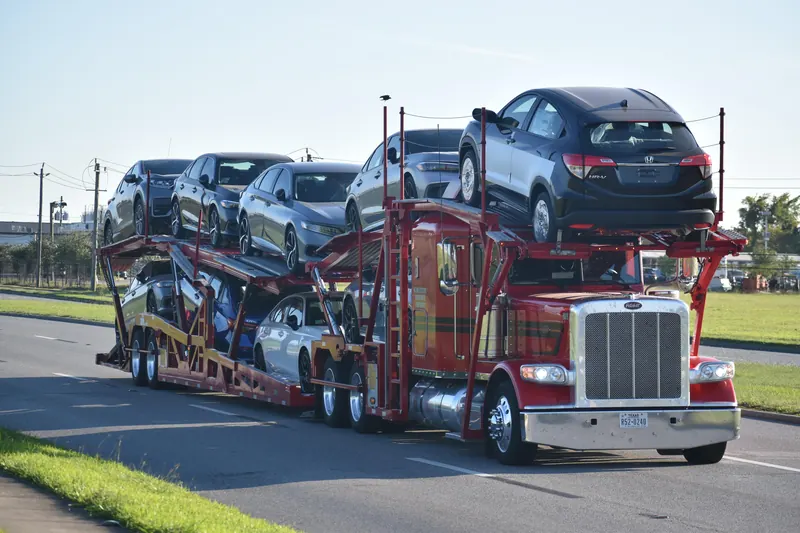
Open Carrier Transport
Our most popular and affordable way to ship: your vehicle travels on a professional open auto carrier.
Learn more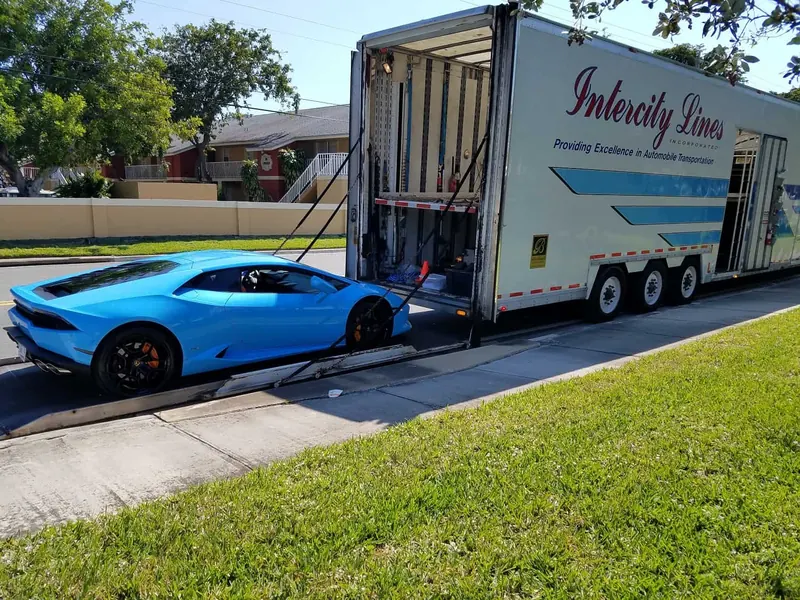
Enclosed Auto Transport
Fully covered protection from weather and road debris, ideal for luxury, exotic and classic cars.
Learn more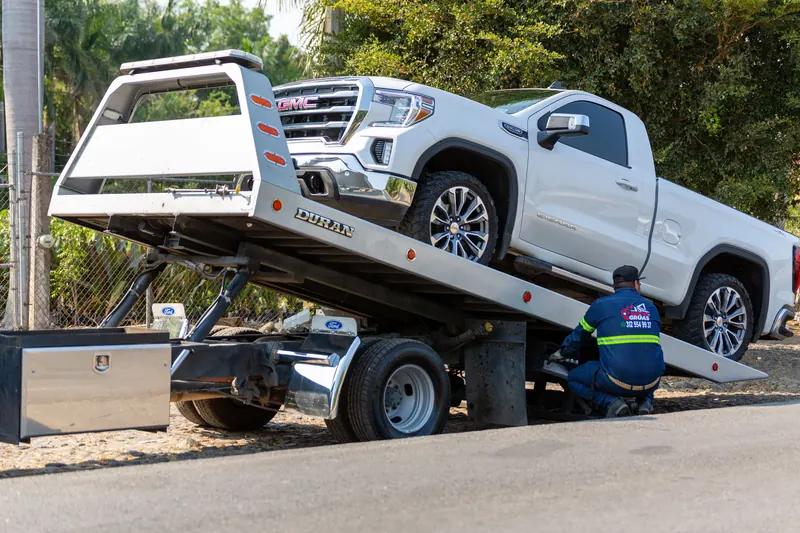
Door-to-Door Service
We pick up and deliver as close to your address as safely possible, on both ends of the move.
Learn more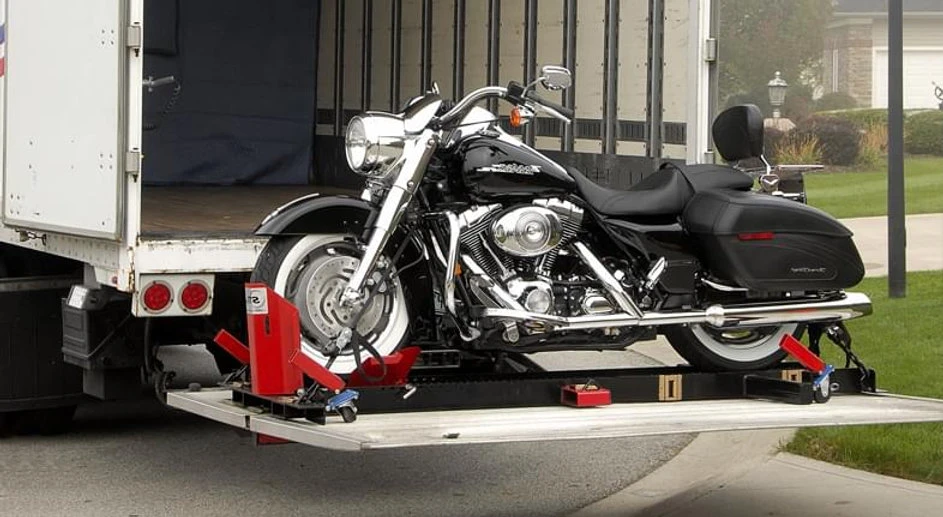
Motorcycle Shipping
Specialized crating, soft-strapping and secure handling for bikes of every make and model.
Learn more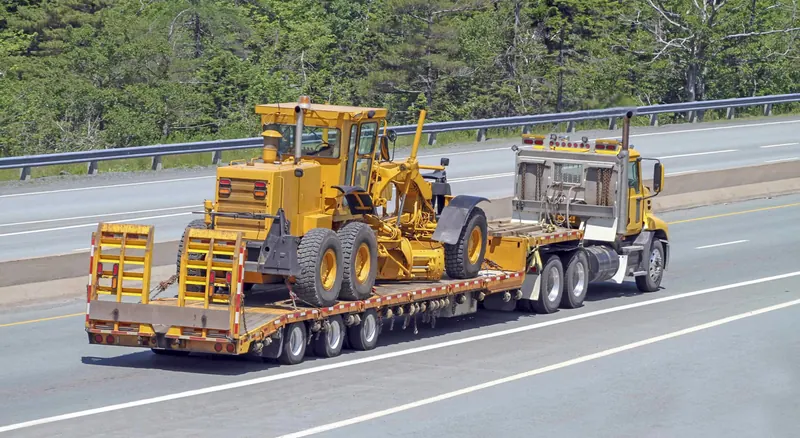
Heavy Equipment Hauling
Flatbed and lowboy transport for construction machinery, tractors and oversized loads.
Learn more
Luxury & Exotic Transport
White-glove, climate-controlled enclosed shipping with extra care for high-value vehicles.
Learn moreAuto transport at each end of your route
Other routes we run regularly
Florida to Illinois shipping FAQs
Ship from Florida to Illinois
Get a free, all-inclusive quote for the Florida to Illinois route today.