
Who actually insures your car on a truck, what the federal minimums do and do not cover, why a carrier's policy limit is not the limit for your vehicle, and how a damage claim really works.
Your vehicle is covered by the assigned carrier's cargo insurance from the moment it is loaded until it is delivered. Whether that actually protects you comes down to three things: whose policy it is, how much of the limit is genuinely available for your car, and what the policy leaves out. Those are what the rest of this guide covers.
Who actually insures your car
The company that insures your vehicle in transit is the carrier, the trucking company whose driver loads it. Not the broker you booked through, and not the website that gave you a quote.
That distinction is the single most useful thing to understand about auto transport insurance, because it tells you which certificate to ask for and who a claim gets filed against. Most companies advertising car shipping online are brokers. A broker arranges the shipment and dispatches it to a carrier; the carrier owns the truck, employs the driver and holds the policy that covers your car. Neptune is a broker, operating under USDOT 3824247 and MC 1384866. We verify the assigned carrier's coverage before your vehicle is loaded, and we send you the certificate, but the policy itself is theirs.
If a company tells you that it insures your car without mentioning the carrier, ask a follow-up question. Either it operates its own trucks, which is worth knowing, or the answer is imprecise.
The two policies an interstate carrier carries
Auto transport insurance is not one policy. It is two, and they do very different jobs. Searchers looking for "auto transport insurance requirements" usually want this section.
Public liability, the federally mandated one
Under 49 CFR 387.9, most for-hire motor carriers operating in interstate commerce must maintain minimum public liability coverage of $750,000 for non-hazardous freight. Many auto transport carriers carry considerably more than the floor, commonly $1,000,000 or above, because shippers and brokers ask for it.
Here is the part that surprises people: public liability does not cover your car. It covers bodily injury and property damage the truck causes to other people and their property. If the carrier hits a fence, that is public liability. Damage to the vehicles riding on the trailer is a different policy entirely.
Cargo insurance, the one that actually covers your vehicle
Cargo insurance is what pays if your car is damaged while it is on the truck. Unlike public liability, there is no single federal minimum that applies to auto transport: the Federal Motor Carrier Safety Administration sets cargo minimums for household goods movers, not for general freight carriers. In practice the market sets the number instead, and brokers enforce it by refusing to dispatch below a threshold.
Typical cargo limits in this industry start around $100,000 and commonly run to $250,000 on standard open carriers. Enclosed carriers usually carry substantially more, often up to $1,000,000, because they exist to move vehicles where that ceiling matters. Amounts vary by carrier and by load, which is why the certificate is worth reading rather than assuming.
Why the policy limit is not the limit for your car
This is the most commonly misunderstood point in auto transport insurance, and it is worth being blunt about.
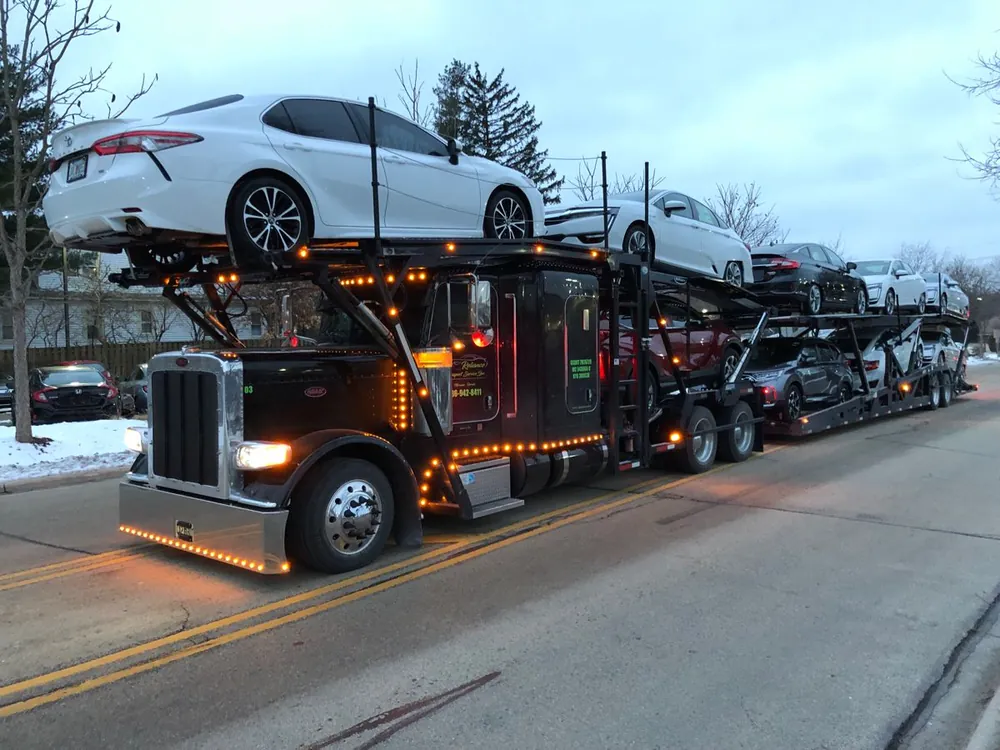
A cargo policy limit is normally per occurrence, shared across every vehicle on the load. It is not a per-car allowance. An open carrier typically holds seven to ten vehicles. If that truck carries a $250,000 cargo policy and an incident damages several cars at once, the $250,000 is the ceiling for the whole event, divided among the affected owners, not $250,000 available to each of them.
For an average sedan on a routine shipment this rarely matters, because single-vehicle incidents are the norm and the limit is far above the value of the car. It matters a great deal if your vehicle is worth a significant fraction of the policy limit. That is a large part of why high-value cars move on enclosed transport: fewer vehicles per trailer and higher limits mean the ratio between your car's value and the available coverage is much healthier.
Ask two questions rather than one. Not just "what is the cargo limit", but "how many vehicles are on the trailer".
What auto transport insurance does not cover
Personal items
Belongings left inside the vehicle are not covered by cargo insurance. Carriers are licensed to move vehicles, not household goods, and their cargo policies are written accordingly. If a suitcase disappears or a box shifts and cracks an interior panel, that is generally on you. There are also weight and safety reasons carriers limit what can stay in the car. We cover the practical rules in what you can pack inside your car.
Pre-existing damage
Anything already on the vehicle when it was loaded is excluded, which is exactly why the condition report at pickup carries so much weight. A scratch that is not documented at pickup is very hard to attribute to transit at delivery.
Wear, mechanical failure and acts of nature
Cargo policies cover damage, not the passage of time. Road film, minor stone chips on an open carrier over a long distance, a battery that goes flat, or a mechanical fault that appears during transit are typically outside the policy. Weather events are handled differently from carrier to carrier, and hail is the exclusion worth asking about specifically if your route crosses the plains in spring. Loose or aftermarket parts that were not secured, including spoilers, roof racks and unattached trim, are also a common exclusion.
Where your own auto policy fits
Some personal auto policies extend comprehensive coverage to a vehicle being transported and some do not. It depends on the insurer and the policy, and it is not something a transport company can answer for you. If you want the certainty, call your insurer before the shipment and ask directly whether your comprehensive coverage applies while the vehicle is in the custody of a motor carrier. It is a five-minute call and the answer occasionally changes how people choose to ship.
How to verify coverage before you book
You are entitled to see the coverage before your car is loaded. Four checks take about ten minutes in total:
- Ask for the certificate of insurance for the assigned carrier, not for the broker. It should name the carrier, the insurer, the policy number, the limits and the effective dates.
- Check the dates. A certificate that expires before your delivery date is not coverage.
- Match the names. The company on the certificate should be the company on your dispatch paperwork and on the truck.
- Verify the authority. Take the carrier's MC and USDOT numbers to the FMCSA SAFER database and confirm the operating authority is active and the record matches.
We run these checks as a matter of course, along with the carrier's safety rating and Central Dispatch rating, before anyone is assigned to your vehicle. You are welcome to run them yourself as well, and a company that hesitates to give you the paperwork has told you something useful. The same checks are part of choosing an auto transport company generally.
The Bill of Lading is the document that decides your claim
The Bill of Lading, usually just called the BOL, is the condition report and the contract of carriage in one document. The driver walks the vehicle at pickup and records existing damage; you sign to agree. At delivery you inspect again against that record and sign to confirm the condition on arrival.
Almost every disputed claim in this industry comes down to this document. Three habits protect you:
- Wash the car before pickup. Dirt hides chips and scratches, and undocumented damage becomes pre-existing damage by default.
- Photograph it yourself, all four corners, the roof, the wheels and the interior, with a timestamp, on the day of pickup.
- Note any new damage on the BOL before you sign at delivery. Signing a clean BOL and calling the next day is the single most expensive mistake a customer can make, because the paperwork now says the car arrived undamaged.
Inspect in daylight if you possibly can. If the truck arrives after dark, note on the BOL that the inspection was conducted in poor light.
How a damage claim actually works
Because the policy belongs to the carrier, the claim is filed with the carrier's insurer, not with the broker. What a good broker does is make that process survivable: we provide the carrier's insurance certificate, the signed Bill of Lading, the dispatch sheet and the contract, which together are the evidence an adjuster asks for.
The sequence is straightforward. Note the damage on the BOL at delivery and photograph it before the truck leaves. Tell your specialist the same day. File with the carrier's insurer, with the documents above attached. Expect the insurer to ask for repair estimates. Deductibles vary by carrier and are worth asking about in advance, because a claim below the deductible is one the carrier settles directly or not at all.
Open, enclosed, and what changes
Open transport is how the large majority of vehicles move, including new cars delivered to dealerships, and the safety record is good. The vehicle is exposed to weather and road debris, which is a real if modest risk over a long distance.
Enclosed transport changes three things at once: the vehicle is protected from weather and debris entirely, there are fewer cars sharing the policy limit, and the cargo limits themselves are generally higher. For a daily driver that combination is rarely worth the difference in cost. For a collector car, a fresh restoration or a vehicle whose value is a meaningful share of a standard cargo limit, it usually is. Our luxury and exotic car transport service exists for that end of the range.
Frequently Asked Questions
If you want the coverage on your own shipment confirmed before you commit, request a free quote and ask your specialist for the assigned carrier's certificate of insurance. You can also read how it works for the full dispatch process, or reach us through contact.