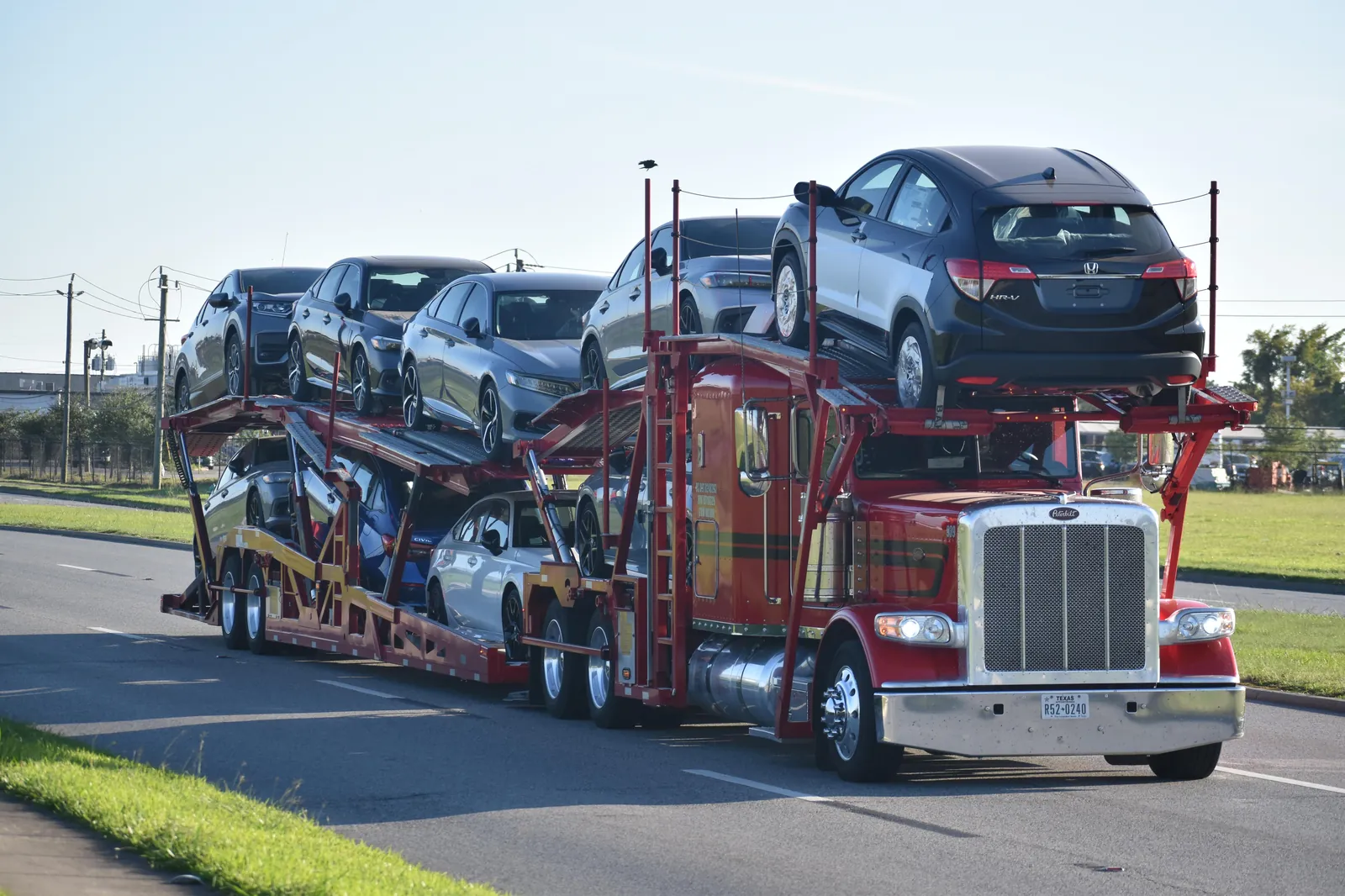
In our records, shipping a car between the Northeast and the West, the classic coast-to-coast move, cost a median of $1,550 to $1,650 depending on direction, and took a median of 6 days from pickup to delivery. Between the West and the South or the Midwest, medians ran $1,200 to $1,250 and trips took about 4 days. Here is where those numbers come from, what our longest lanes have cost and what moves an individual price.
What cross-country shipments cost, by region
These are the bands behind our cost calculator: all-inclusive prices for cars and SUVs Neptune shipped in the 12 months to 25 August 2026, with voided orders left out. The middle half runs from the 25th to the 75th percentile of what customers paid.
| Between | Shipments | Middle half paid | Median |
|---|---|---|---|
| Northeast to West | 46 | $1,400 to $1,950 | $1,650 |
| West to Northeast | 41 | $1,300 to $1,800 | $1,550 |
| South to West | 120 | $1,000 to $1,525 | $1,200 |
| West to South | 189 | $1,050 to $1,550 | $1,250 |
| Midwest to West | 56 | $975 to $1,400 | $1,200 |
| West to Midwest | 52 | $1,125 to $1,450 | $1,250 |
The West here means the 11 western states we serve: Arizona, California, Colorado, Idaho, Montana, Nevada, New Mexico, Oregon, Utah, Washington and Wyoming. The Northeast runs from Pennsylvania and New Jersey through New York and New England. The South runs from Texas and Oklahoma to Florida and up the Atlantic coast to Delaware, and the Midwest from Ohio and Michigan to the Dakotas and Kansas. Read these as history, not as a quote: they cover cars and SUVs only, and they mix open and enclosed transport, because our dispatch records carry no transport-type field.
What our longest lanes have cost
Some lanes have enough shipments of their own to publish. Each figure below is the one on that lane's page, with its window and the number of car and SUV shipments behind it.
| Lane | Shipments and window | Middle half paid | Median |
|---|---|---|---|
| Georgia to California | 25 in the 24 months to 25 August 2026 | $975 to $1,300 | $1,100 |
| California to Texas | 33 in the 12 months to 25 August 2026 | $975 to $1,200 | $1,100 |
| Texas to California | 25 in the 12 months to 25 August 2026 | $750 to $1,350 | $950 |
For a more recent picture, the Florida to California, California to Florida, New Jersey to California, California to New Jersey, California to Maryland, Florida to Arizona and Texas to Washington State pages list prices by vehicle from 2026, through October.
How long a cross-country shipment takes
From 3,289 delivered car and SUV trips picked up between May 2022 and August 2026, counted from pickup to delivery:
- Between the Northeast and the West: a median of 6 days. Westbound, the middle half of trips took 5 to 8 days; eastbound, 4 to 7.
- Between the West and the South or the Midwest: a median of 4 days, the middle half 3 to 6, in both directions.
- California to Florida: a median of 6 days, the middle half 5 to 7.
Those are days on the truck once the car is loaded, not a promise for yours. Carriers make several stops and must follow legal driving-hour limits, and arranging the pickup takes time on top of that. Our transit-time guide has the full table for every region.
Fuel prices in 2026
Diesel feeds into what carriers charge, and long lanes feel it most. The U.S. Energy Information Administration's weekly average for diesel was $6.35 a gallon in the week of October 26, 2026, against $3.72 a year earlier, and almost all of that rise came from March 2026 on. The bands above cover the year to August, so a quote for a long lane today can land above them. Our guide to how fuel costs affect car shipping rates shows how a fuel surcharge is worked out and why it is shared across every car on the trailer.
What moves a cross-country price
- The exact distance. New York or Newark to Los Angeles is about 2,800 miles by road, and Florida to California roughly 2,730, most of it along Interstate 10. A pickup or delivery far from the interstates adds miles and time.
- The corridor. Most coast-to-coast loads follow one of a few long interstate corridors; our cross-country shipping tips explain how the route shapes the trip.
- The vehicle. Pickups, vans and large SUVs take more deck space than a sedan and cost more, and a car that does not run needs a carrier with a winch.
- Open or enclosed. Enclosed transport costs substantially more than open, because the trailer holds fewer vehicles.
- Your dates. A few days of flexibility around pickup makes your car easier to fit into a load.
Getting a price for your move
Every quote we give is all-inclusive. Our cost calculator shows the band for any pair of states, and a specialist prices your exact addresses, vehicle and dates. Request a free quote, or read about our cross-country auto transport service.