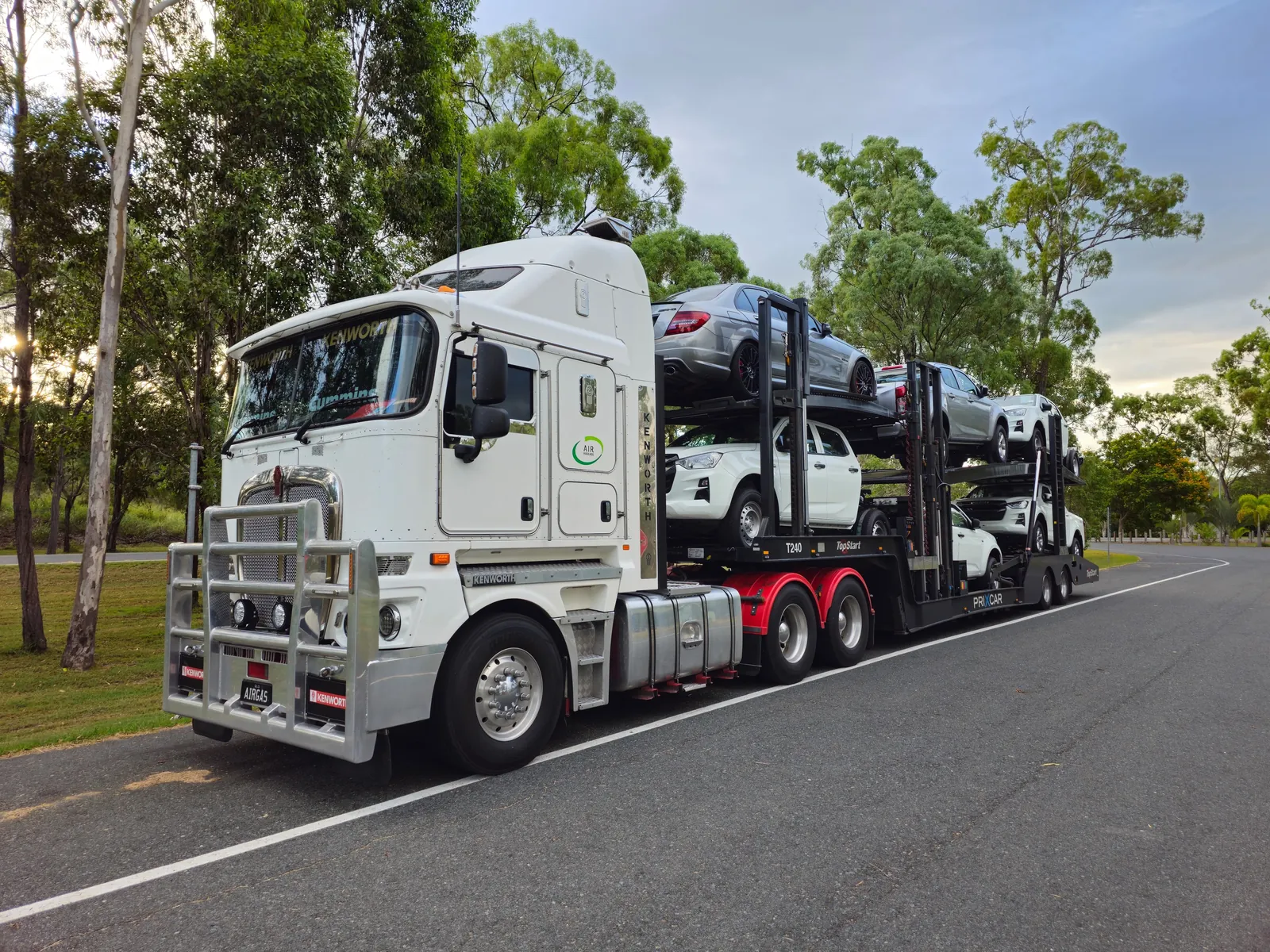
Your car shipping quote went up and nothing about your move changed. Here is how diesel prices feed into what you pay, how fuel surcharges actually work, and what you can do about it.
Car haulers run on diesel, and fuel is one of a carrier's largest costs. When the weekly national diesel average rises, carriers need more per load, so quotes rise, most of all on long routes. The fuel bill is split across every car on the trailer, and rates usually lag a drop in fuel by a few weeks.
Why did my car shipping quote increase?
You priced your move a few months ago. Now you ask again, same car, same route, and the number is higher. It is natural to wonder whether someone is taking advantage of you. Why did my car shipping quote increase is one of the most common questions anyone in auto transport hears, and it is a fair one.
Usually the answer starts at the pump. Car haulers are large diesel trucks that cover thousands of miles a month, and when diesel goes up, the cost of moving your car goes up with it. Understanding how rising fuel costs impact car shipping rates will not lower diesel prices, but it will help you read a quote clearly, spot one that is padded, and time your booking better.
In this guide you will learn:
- How fuel prices affect auto transport costs, and why the effect is bigger on long routes
- How fuel surcharges work, in plain English, with a worked example
- Why quotes move from week to week, and how much of the price fuel really is
- Whether rates fall when gas prices drop
- Practical ways to save when fuel is expensive
Why fuel costs matter in auto transport
Car haulers run on diesel
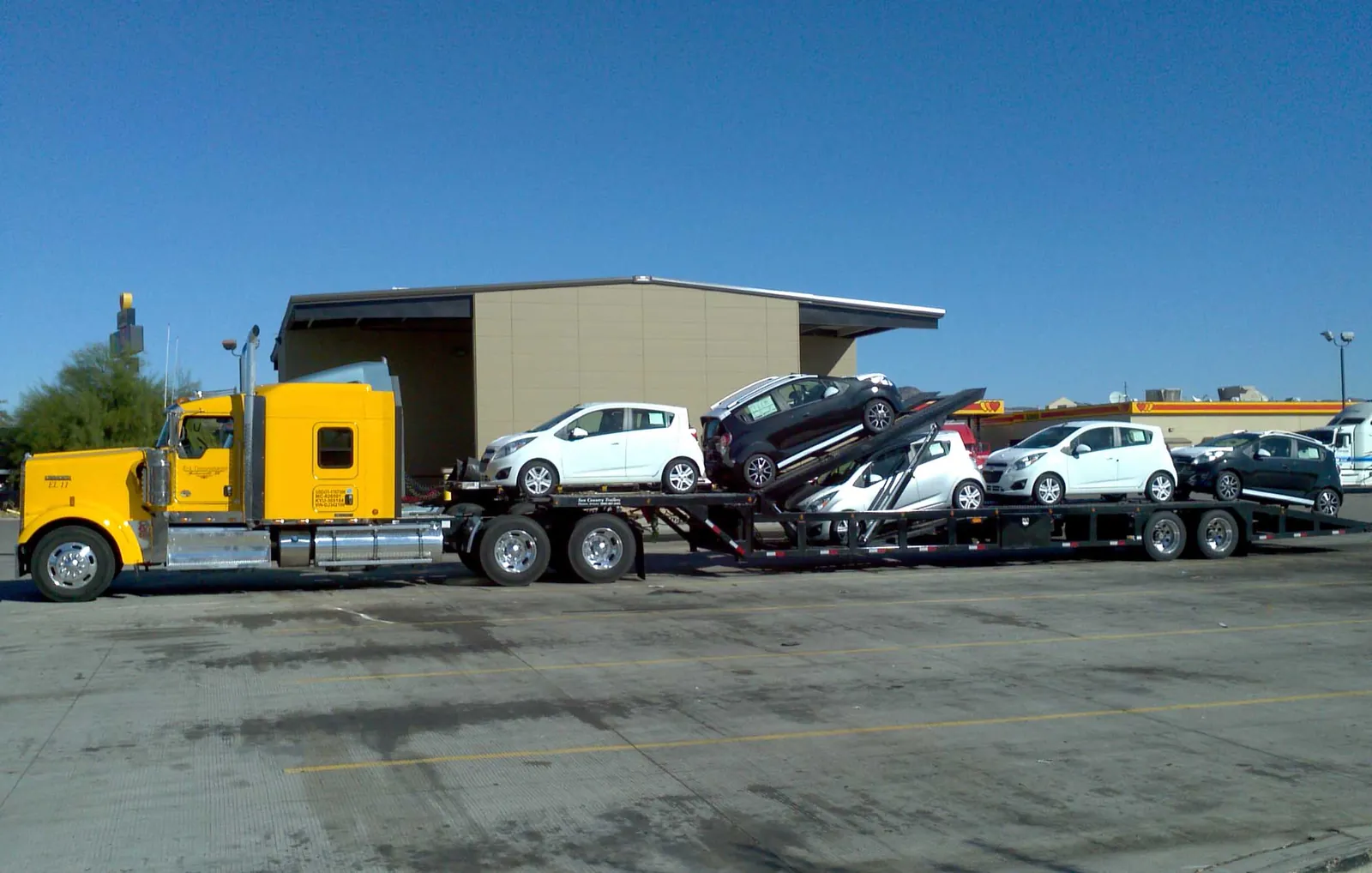
Nearly every car hauler on U.S. highways is a heavy-duty truck with a diesel engine. A fully loaded open carrier can weigh close to 80,000 pounds, the federal gross weight limit on interstate highways, and moving that much weight takes a lot of fuel. Industry estimates put a loaded car hauler at roughly 5 to 7 miles per gallon, and hills, headwinds and traffic push that lower.
At that rate, a truck running coast to coast burns somewhere around 450 to 550 gallons of diesel on one trip, before counting the empty miles it drives to reach its next load. At that volume, even a modest change in the price per gallon adds up quickly.
Fuel is one of a carrier's biggest expenses
The American Transportation Research Institute (ATRI) publishes an annual study of what it costs to operate a truck. Its 2026 update, covering 2025, put the average cost of running a truck at a record $2.336 a mile. Fuel accounted for about 48 cents of that, roughly a fifth of every mile, and that share grows in years when diesel is expensive.
Most car haulers are small businesses or owner-operators working on thin margins. They cannot absorb a sustained jump in diesel for long, which is why the fuel cost impact on the vehicle transport industry shows up in customer prices rather than disappearing into a carrier's profit.
The benchmark everyone watches
The number the trucking industry watches is the U.S. Energy Information Administration's weekly national average price for on-highway diesel. The EIA is the statistics arm of the Department of Energy, and it publishes that average every week, usually on Monday, along with regional averages. You can see the current figure yourself on the EIA's gasoline and diesel fuel update. It is the closest thing trucking has to a shared fuel surcharge index.
Fuel surcharge explained for car shipping
The basic idea
A fuel surcharge is an adjustment that covers the gap between what diesel costs today and a base price built into a carrier's standard rate. When diesel is above the base, the surcharge rises. When diesel falls back, it shrinks.
In general freight, the surcharge is often a separate line on the invoice. In car shipping it is more often folded into a single price, because the carrier is setting what it needs to take a load at today's fuel cost. Either way, the logic is the same.
How trucking companies calculate fuel surcharges
Most formulas follow three steps:
- Start with the current diesel price, usually the EIA's weekly national or regional average.
- Subtract a base price, the diesel cost the carrier's standard rate already assumes.
- Divide by the truck's fuel economy to get an extra cost per mile, then multiply by the miles driven.
A worked example
The figures below are hypothetical round numbers chosen to show the arithmetic. They are not Neptune rates and not current diesel prices.
Imagine a carrier whose rates assume diesel at $3.00 a gallon. This week diesel averages $4.00, and the truck gets 6 miles per gallon loaded. On a trip of about 1,400 miles, roughly Chicago to Miami:
- Price gap: $4.00 minus $3.00 is $1.00 a gallon
- Extra cost per mile: $1.00 divided by 6 mpg is about 17 cents a mile
- Extra cost for the trip: 1,400 miles at 17 cents is about $233 for the whole truck
Here is the part most people miss: that cost is shared across every car on the trailer. An open carrier usually hauls seven to ten vehicles, so on a full load your car's share of that $233 is roughly $23 to $33. It is more if the truck runs partly empty.
| Diesel price | Extra cost per mile | Extra for the whole truck | Share per car |
|---|---|---|---|
| $3.00 (base) | none | none | none |
| $3.50 | about 8 cents | about $117 | about $15 |
| $4.00 | about 17 cents | about $233 | about $29 |
| $4.50 | about 25 cents | about $350 | about $44 |
| $5.00 | about 33 cents | about $467 | about $58 |
Key takeaway: fuel arithmetic alone rarely explains a large jump in a quote. When diesel climbs, carriers also get pickier about which loads they accept, and that shift in the carrier market often moves prices more than the fuel math does.
How rising fuel costs affect your car shipping quote
Car shipping cost breakdown: fuel and labor
Your quote covers much more than fuel. A typical car shipping cost breakdown includes:
- Fuel, for the loaded trip and the empty miles between loads
- Labor, the driver's pay, usually the largest single cost
- Insurance, cargo and liability coverage held by the carrier
- Equipment, truck and trailer payments, tires and maintenance
- Tolls, permits and compliance, registrations, inspections and state fees
- Coordination, matching your car with a vetted carrier and managing the shipment
Why car shipping quotes fluctuate daily
Auto transport works like a live marketplace. Carriers choose the loads that pay enough to cover their costs, so the price that gets a truck to your door shifts with:
- Diesel prices, which update weekly and sometimes move sharply
- Seasonal demand, such as the summer moving season, when our interstate pickups peak
- Route traffic: busy interstate corridors fill trucks faster than remote destinations
- Carrier availability near your pickup address that week
That is why car shipping prices go up even when nothing about your shipment has changed. Our guide to the best time of year to ship a car covers the seasonal side in more detail.
What percentage of car shipping cost is fuel?
There is no single industry-wide figure, and anyone quoting you an exact percentage is guessing. ATRI's figures put fuel at about a fifth of a truck's operating cost in 2025: a big line item, but a minority of the total. That share is larger on long hauls, where almost every mile is highway. That is how fuel costs affect cross-country car shipping more than a short regional move: there are simply more miles to fuel. If you want to see what real shipments cost, our car shipping cost guide and cost calculator publish ranges from Neptune's own dispatch records, and the New York to Florida and California to Texas route pages show lane-level history.
Will car shipping rates go down if gas prices drop?
Sometimes, but usually not right away and not by the same amount.
First, the pump price you see is not the price carriers pay. Gasoline and diesel are different fuels with different demand, and diesel also answers to heating oil and farm season. So does the gas price affect car shipping rates? Only indirectly. Diesel is the number that matters.
Second, there is a lag. Surcharge formulas follow weekly averages, so a drop takes at least a week or two to register, and market rates can take longer as carriers recover from months of expensive fuel.
Third, fuel is only one piece. If demand is high on your route, or trucks are scarce that week, cheaper diesel can be outweighed by everything else.
A realistic expectation: falling diesel can ease rates over several weeks, especially on long routes. It will not erase the other costs of moving your car.

How to save money on car shipping when fuel is expensive
You cannot control diesel, but you can control several things that matter just as much:
- Book early. Reserving two to three weeks ahead gives your specialist time to find a carrier already heading your way. It is the closest thing to locking in a car shipping rate before fuel prices rise further.
- Keep your dates flexible. A wider pickup window lets your car fill the last open spot on a truck, often the best-value load a carrier has.
- Choose open transport. Open carriers spread fuel across more cars, while enclosed trailers carry fewer and cost more per vehicle. Our guide to open vs. enclosed auto transport explains when enclosed is worth it.
- Avoid peak season if you can. The cheapest time to ship a car usually has more to do with demand than with fuel. Shipping outside the summer moving peak helps.
- Compare quotes on the same terms. Ask every company whether its price is all-in. A low quote with a fuel fee added later is not a bargain.
- Be wary of very low bids. A price below what carriers will accept can leave your car waiting for pickup while diesel keeps climbing.
- Weigh the terminal trade-off honestly. Terminal-to-terminal shipping can look cheaper on paper, but the drive to and from a depot, plus storage fees, often cancels the saving. Neptune does not offer terminal shipping; door-to-door transport is included in every quote.
Should I ship my car or drive it when gas is expensive?
When you compare car shipping with driving, add up gas, hotels, meals, time off work and the wear on your car. On a cross-country move, your own fuel bill alone can be substantial, and the other costs pile on top. Shipping often comes out closer than people expect, which is why so many customers choose cross-country auto transport instead.
Why choose Neptune Auto Transport
Neptune Auto Transport is a licensed auto transport broker, USDOT 3824247, arranging door-to-door shipping across the 48 contiguous states on open and enclosed carriers. Here is how we handle rising fuel costs:
- Transparent, all-inclusive pricing. Your specialist builds current fuel costs into one clear price before you book. The price we quote is the price you pay, with no fuel surcharges sprung on you at delivery.
- Honest explanations. If your quote is higher than one you got a few months ago, we will tell you why, whether that is fuel, season or carrier supply on your route.
- Vetted, insured carriers. We verify authority and insurance before dispatch and share the coverage details with you.
- One dedicated specialist from quote to delivery.
- No deposit at the quote stage. Nothing is due until a driver is booked.
We cannot control diesel prices, and no honest company can promise that it will. What we can do is make sure you know exactly what you are paying and why. Get a free quote.
Frequently asked questions
The bottom line
Now you know how rising fuel costs impact car shipping rates. Diesel is one of a carrier's largest expenses, fuel surcharges follow the weekly diesel average, and the cost is shared across every car on the trailer. You also know how fuel prices affect auto transport costs differently on long and short routes, and why falling gas prices do not always mean lower quotes right away.
The best protection is a clear, all-inclusive quote from a company willing to explain it. At Neptune Auto Transport, your specialist builds current fuel costs into one upfront price, and nothing is added at delivery.
Ready to see your real number? Get your free, all-inclusive quote, or call (929) 566-5872 to talk with a shipping specialist today.


