
New Mexico Car Shipping & Auto Transport
Door-to-door car shipping to and from New Mexico, fast, insured and affordable, connecting New Mexico with all 48 contiguous states.
Neptune Auto Transport arranges New Mexico car shipping and auto transport to and from every part of the state, door to door. We move cars, SUVs, pickups and motorcycles between New Mexico and the other 47 contiguous states on open and enclosed carriers, with the assigned carrier’s cargo insurance verified before your vehicle is loaded and one all-inclusive price agreed up front. Whether the vehicle is leaving a driveway in Albuquerque’s North Valley, a Rio Rancho cul-de-sac, a narrow lane off Canyon Road in Santa Fe or a ranch road outside Roswell, we arrange pickup as close to the address as a full-size truck can legally and safely reach. Request a free New Mexico quote and a specialist will price your specific move.
Why New Mexico sits in the middle of the country’s busiest lanes
New Mexico is a crossroads state. Far more trucks cross it than start or finish a run here, and that single fact shapes most of what matters about shipping a car to or from New Mexico: what it costs, how quickly a carrier can be found, and why an address five miles off an interstate prices differently from one fifty miles off it.
- Three interstates carry nearly all the freight. I-40 crosses the state east to west through Gallup, Grants, Albuquerque, Santa Rosa and Tucumcari, and it is the main road between Southern California and the Midwest and Mid-South. I-25 runs north to south from Raton Pass at the Colorado line down through Las Vegas, New Mexico, then Santa Fe, Albuquerque, Socorro and Truth or Consequences to Las Cruces. I-10 crosses the far south through Lordsburg and Deming into El Paso, the southern route between California and Texas, the Gulf Coast and Florida. The two big ones meet at the Big I interchange in Albuquerque.
- Albuquerque concentrates the demand. The Albuquerque metro, counting Rio Rancho and the Rio Grande valley towns around it, holds close to half the state’s population. Carrier density follows population, so the Albuquerque area is where a truck is easiest to find and where pickup windows are consistently shortest.
- Federal labs and air bases move people constantly. Sandia National Laboratories and Kirtland Air Force Base in Albuquerque, Los Alamos National Laboratory northwest of Santa Fe, White Sands Missile Range, Holloman Air Force Base at Alamogordo and Cannon Air Force Base at Clovis all bring staff and service members in on transfer schedules that have nothing to do with the calendar. That keeps military PCS vehicle transport steady here in every month of the year.
- The Permian Basin runs on its own cycle. Hobbs, Carlsbad, Artesia, Lovington and Eunice sit over the New Mexico side of the Permian, and the workforce there turns over with drilling activity rather than with the seasons. Trucks and work vehicles move in and out of Lea and Eddy counties in both directions, most often to and from West Texas.
- Las Cruces is effectively part of a Texas border metro. Las Cruces sits about 45 miles up I-10 from El Paso, and for carrier routing purposes the two are one market. A vehicle moving to or from southern New Mexico is usually riding a truck routed through El Paso, which is why Texas auto transport lanes have so much influence on Doña Ana County pricing.
- Universities pull cars in every August. The University of New Mexico in Albuquerque, New Mexico State in Las Cruces, New Mexico Tech in Socorro and Eastern New Mexico University in Portales all draw out-of-state students, so college student car shipping climbs sharply in late summer and again in May.
- Seasonal traffic both passes through and stops here. Some of the vehicles on I-10 and I-40 in October and March are snowbird shipments moving between the north and the Sunbelt, and some are landing in Las Cruces, Alamogordo and Truth or Consequences for the winter. Ski season in Taos, Angel Fire and Ruidoso adds movement in the other direction.
New Mexico car shipping services
Neptune is a licensed auto transport broker, MC 1384866 and USDOT 3824247. We do not own trucks or employ drivers. We vet carriers, check operating authority and the cargo insurance certificate, and dispatch your vehicle to the truck best matched to your lane and your dates. In a pass-through state that matching work is most of the value, because the right answer here is usually a carrier that was already scheduled to drive I-40, I-25 or I-10 that week. Every option below includes door-to-door pickup and delivery and the assigned carrier’s cargo insurance, verified before loading.
Open carrier transport
Open carrier transport is what most New Mexico customers book and what we recommend for a standard daily driver. Your vehicle rides on a multi-car open hauler, the same equipment dealerships use to move new inventory. Open trucks are by far the most common thing running the New Mexico interstates, which means the widest carrier availability and the shortest pickup windows in the state. The desert sun and the occasional dust or hail event are the trade-off, and for most vehicles that trade-off is worth the price difference.
Enclosed auto transport
Enclosed auto transport puts your vehicle inside a covered trailer, out of weather, road grit and view. It is the standard choice for classics, exotics, high-value luxury cars and low-clearance vehicles, and in New Mexico it is worth booking further ahead than you would elsewhere. Enclosed trailers are a small share of the fleet nationally and a smaller share of what crosses New Mexico, so dispatch for an enclosed pickup in Santa Fe, Taos or Ruidoso can take noticeably longer than an open one in Albuquerque. See open vs enclosed auto transport for the full comparison.
Door-to-door pickup and delivery
Door-to-door auto transport means the driver comes to your address on both ends, with no terminal drop-off. In practice a 75-foot carrier cannot always reach the door, and New Mexico produces that situation in its own particular ways: the narrow dirt and gravel lanes in Santa Fe’s east side and Eldorado, low-clearance parking structures downtown, gated developments in the Sandia foothills, arroyo crossings on rural county roads, and long unpaved driveways on ranch property. When a street will not take a full-size truck, the driver arranges a short meet nearby, usually a large lot on a main road, at no extra cost.
Expedited auto transport
When a report date, a closing or a start date will not move, expedited auto transport puts your shipment at the front of the dispatch queue rather than waiting for the best-priced truck. It carries a premium. It works best out of Albuquerque and off the I-10 and I-40 corridors, where there is enough passing traffic to work with on short notice, and it is least effective in the far northwest and the eastern plains.
Military PCS vehicle shipping
New Mexico hosts Kirtland, Holloman, Cannon and White Sands, and military vehicle transport is one of the more consistent reasons cars move in and out of the state. Orders rarely line up with a convenient pickup window, so tell your specialist the report date and the flexibility you actually have and we will build the dispatch around it. Alamogordo and Clovis both sit well off the interstates, which is worth planning an extra day or two for.
Motorcycles, heavy equipment and non-running vehicles
We arrange motorcycle shipping with soft straps and proper chocking, heavy equipment hauling on flatbed and lowboy trailers, and transport for inoperable vehicles that need a winch. A non-running vehicle narrows the pool of trucks that can take the job, since not every carrier has a working winch and the deck space to use it, so declare it at quote time rather than at pickup. Boats, travel trailers, RVs, golf carts and ATVs are also arranged; ask your specialist for those directly.
Classic, luxury and exotic vehicles
Santa Fe and Taos support a real collector and gallery market, and Albuquerque’s car scene keeps a steady flow of restored vehicles moving in and out of the state. Classic car transport and luxury and exotic transport use enclosed equipment with lift gates or low-angle ramps for cars that cannot clear a standard ramp. Our classic car shipping guide covers preparation for vehicles that are not driven often.
Dealer and auction transport
Dealer and auction transport covers wholesale movement between New Mexico dealerships, auction lanes and out-of-state buyers, including single units bought online. If you bought a vehicle sight-unseen, read shipping a car you bought online before you arrange pickup, particularly on the inspection and bill of lading steps.
Car shipping in New Mexico, region by region
New Mexico is the fifth largest state by area and one of the least densely populated, so where you are matters more here than in most states. Pricing and pickup timing are driven less by mileage than by how far your address sits from a corridor a carrier is already driving.
Albuquerque and the middle Rio Grande
Albuquerque, Rio Rancho, Bernalillo, Los Lunas, Belen and Corrales sit at the I-40 and I-25 crossing, which makes this the easiest place in New Mexico to get a truck in and out of. Most quotes for the state begin or end here. Access is generally straightforward, with the usual exceptions: the foothills streets east of Tramway, the older narrow blocks in Nob Hill and Barelas, and apartment complexes near the university where a full-size carrier has nowhere to stage. Albuquerque car shipping has the detail for that market.
Santa Fe, Los Alamos and northern New Mexico
Santa Fe, Española, Los Alamos, Taos, Las Vegas and Raton are served off I-25 and US 285. Santa Fe generates a disproportionate share of the state’s enclosed and high-value shipments, and it is also the hardest common pickup in New Mexico for a large truck: unpaved lanes, tight adobe-era streets around the Plaza and Canyon Road, and long private drives in Tesuque and Eldorado. Expect to meet the driver on a main road more often than not, and see Santa Fe auto transport for the neighborhood-level detail. North of Santa Fe, Raton Pass on I-25 tops 7,800 feet and closes to high-profile traffic in winter storms, which pushes northbound Colorado runs onto slower alternatives for a day or two at a time.
Las Cruces and the southern border corridor
Las Cruces, Deming, Lordsburg, Anthony and Sunland Park are all on or near I-10, and carrier availability here is genuinely good because it is one of the two main southern crossings of the country. The practical thing to know is that this market is routed through El Paso. A Las Cruces pickup usually rides on a truck that is loading or unloading in the El Paso area the same day, and rates track the El Paso lane rather than a New Mexico one. Spring dust storms on I-10 between Lordsburg and Las Cruces cause real closures, not just slowdowns. Las Cruces car shipping has the access and routing detail for that market.
Southeast New Mexico and the Permian Basin
Roswell, Carlsbad, Hobbs, Artesia and Lovington are off the interstate system, reached on US 285, US 62/180 and US 70. Volume here is driven by oilfield work rather than by seasons, and it usually connects east to Midland, Odessa and the rest of West Texas rather than west to Albuquerque. That works in your favor if you are shipping to or from Texas and against you if you are shipping to the West Coast, since the truck often has to come out of the Permian first. A pickup window of a few extra days makes a meaningful difference to price in this region.
Northwest New Mexico and the Four Corners
Farmington, Aztec, Bloomfield, Gallup and the communities across the Navajo Nation are the most remote part of the state for auto transport. Gallup at least sits on I-40. Farmington does not: it is roughly 180 miles up US 550 from Bernalillo, a detour no through-carrier makes without a reason. Shipments here are almost always built around a truck willing to run the spur, which means a longer dispatch window and a price that reflects the deadhead miles. Booking a week or more ahead is the single most useful thing you can do.
The eastern plains
Clovis, Portales, Tucumcari and Santa Rosa sit along I-40 and US 60 near the Texas line. Tucumcari and Santa Rosa are straightforward because they are on the interstate. Clovis and Portales are about 100 miles south of it and generally connect through Amarillo or Lubbock, so eastern-plains shipments tend to price and schedule like Texas panhandle moves.
Cities we serve in New Mexico
We arrange pickup and delivery statewide, from the Albuquerque metro to towns with no interstate anywhere near them.
Three New Mexico markets have their own page. Albuquerque auto transport covers the largest one, the Big I interchange that makes it the easiest New Mexico pickup to schedule, and the neighborhood access detail that decides whether a carrier reaches your door or meets you on a main road. Santa Fe car shipping covers the capital at 7,000 feet, where the collector market drives enclosed demand and the old streets decide where a truck can actually load. Las Cruces vehicle shipping covers the I-10 and I-25 junction 45 miles from El Paso, which is the most reliable pickup point in the state.
Beyond Albuquerque we regularly arrange transport for Rio Rancho and the valley towns of Bernalillo, Corrales, Los Lunas and Belen; Santa Fe, Los Alamos, Española and Taos in the north; Las Cruces, Deming, Lordsburg and Anthony along I-10; Roswell, Carlsbad, Artesia, Hobbs and Lovington in the southeast; Alamogordo, Ruidoso, Socorro and Truth or Consequences on the I-25 and US 70 side; Farmington, Aztec, Bloomfield and Gallup in the northwest; and Clovis, Portales, Tucumcari and Santa Rosa out east. Smaller communities and rural addresses in between are covered from the same carrier network. If your town is not named here, it is still served. Ask your specialist what the realistic pickup window looks like for that address.
Nationwide transport for every kind of vehicle
Whatever you drive and wherever it needs to go, Neptune has a shipping solution built for it. Explore our most-requested services.
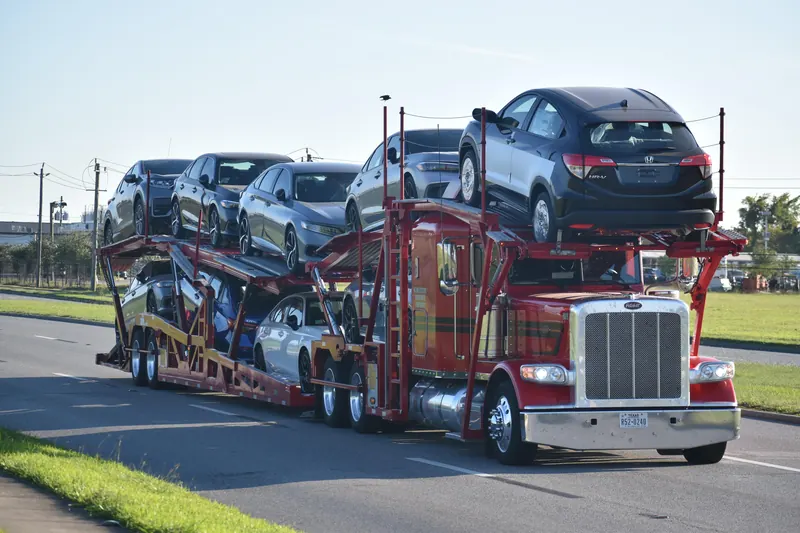
Open Carrier Transport
Our most popular and affordable way to ship: your vehicle travels on a professional open auto carrier.
Learn more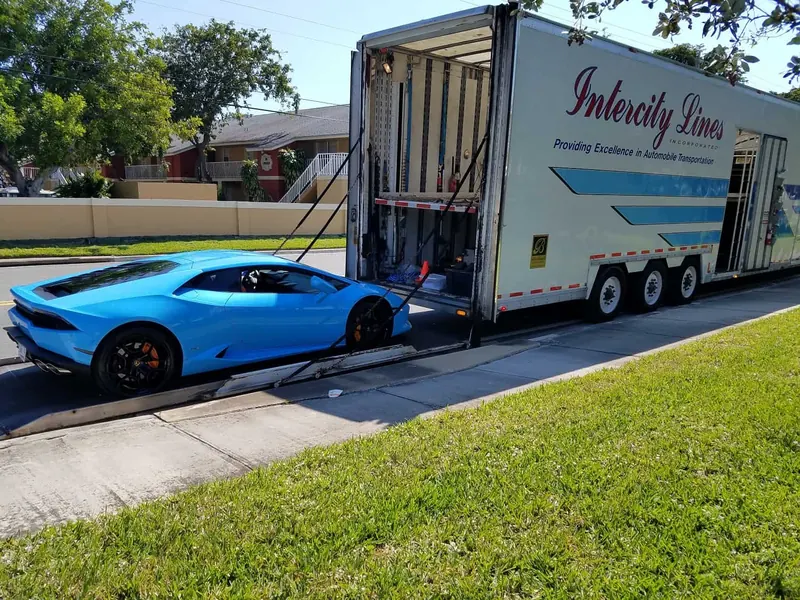
Enclosed Auto Transport
Fully covered protection from weather and road debris, ideal for luxury, exotic and classic cars.
Learn more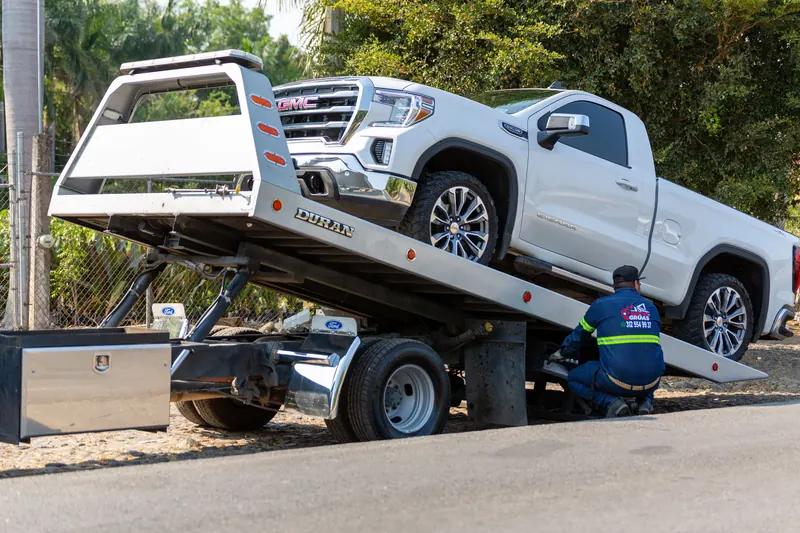
Door-to-Door Service
We pick up and deliver as close to your address as safely possible, on both ends of the move.
Learn more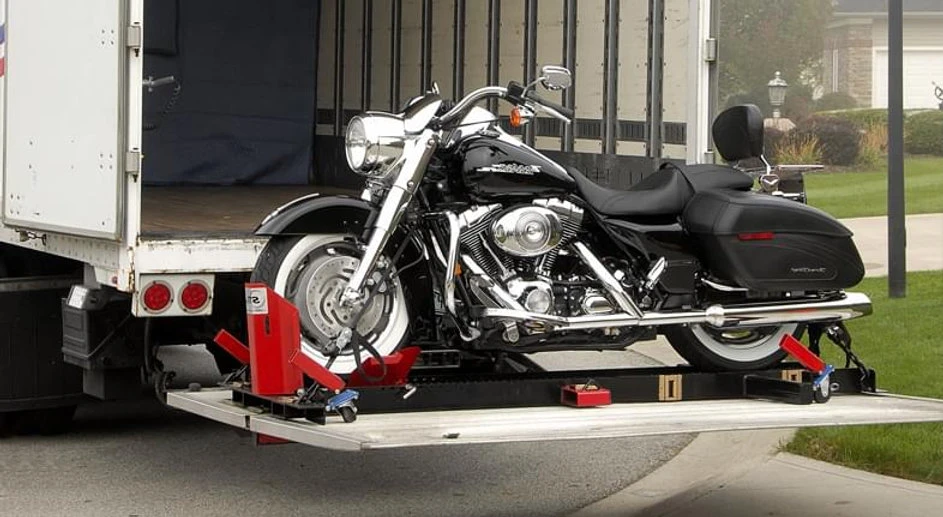
Motorcycle Shipping
Specialized crating, soft-strapping and secure handling for bikes of every make and model.
Learn more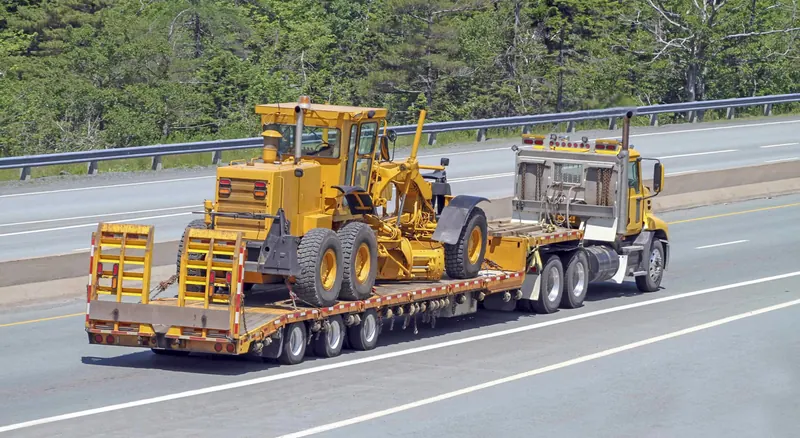
Heavy Equipment Hauling
Flatbed and lowboy transport for construction machinery, tractors and oversized loads.
Learn more
Luxury & Exotic Transport
White-glove, climate-controlled enclosed shipping with extra care for high-value vehicles.
Learn morePopular New Mexico car shipping routes
The lanes below are the ones New Mexico shipments most often ride, and they are where pickups get scheduled soonest and priced most sharply. Distances are approximate driving miles and transit figures are typical estimates once the vehicle is loaded, not guaranteed delivery dates.
- New Mexico to Texas, and Texas to New Mexico. The busiest direction out of the state. Southern New Mexico feeds straight into El Paso on I-10, the southeast connects to Midland and Odessa on US 285 and US 62/180, and Albuquerque runs east on I-40 to Amarillo and then down US 287 to the Dallas-Fort Worth metroplex, roughly 650 miles and typically 2 to 4 days. Albuquerque to Houston is about 880 miles and 3 to 5 days. Both directions run year-round on oilfield, military and corporate relocation traffic rather than seasonal demand. Full detail is on our New Mexico to Texas auto transport page, with the reverse leg on Texas to New Mexico car shipping, and Texas auto transport covers the destination side.
- New Mexico to Arizona, and Arizona to New Mexico. Albuquerque to Phoenix is about 420 miles, most commonly run down I-25 to Socorro and across US 60, or west on I-40 to Flagstaff and south on I-17. Tucson connects through Lordsburg on I-10. This is a short-haul lane, which means a higher cost per mile than a long run and a strong preference among carriers for folding it into a longer trip, so flexibility on the pickup date pays here. See Arizona auto transport.
- New Mexico to Colorado, and Colorado to New Mexico. Straight up I-25 over Raton Pass. Albuquerque to Denver is roughly 450 miles and usually 2 to 3 days; Santa Fe to Denver is about 390 miles. Winter is the variable, since Raton Pass sits above 7,800 feet and closes to high-profile vehicles in storms. Northern New Mexico ski traffic and Front Range relocations keep it steady the rest of the year. See Colorado auto transport.
- New Mexico to California, and California to New Mexico. Albuquerque to Los Angeles is about 790 miles on I-40 and typically 2 to 4 days. This is the single easiest New Mexico lane to get dispatched, because it is a segment of the country’s highest-volume corridor rather than a route built for you. Trucks running California to Texas and Texas to California pass through New Mexico on I-10 or I-40 constantly, and a New Mexico pickup that fits an existing run prices accordingly. See California auto transport.
- New Mexico to Nevada and Utah. Albuquerque to Las Vegas, Nevada is roughly 575 miles, generally by I-40 west to Kingman then US 93. Utah connects through Gallup and Shiprock or up through Durango. Neither lane is heavily trafficked on its own, so both are usually built onto a longer westbound or northbound run. See Nevada and Utah auto transport.
- New Mexico to the Midwest and Southeast. I-40 east through Amarillo and Oklahoma City is the road to almost everything on this side. Albuquerque to Chicago is about 1,335 miles and 4 to 6 days; Albuquerque to Atlanta is roughly 1,420 miles and 4 to 7 days. Trucks that ran California to Colorado or the wider I-40 corridor often have room on the return leg. See Oklahoma auto transport for the neighboring leg.
- New Mexico to the East Coast. Albuquerque to New York is about 1,990 miles and generally 6 to 9 days in transit. These run as cross-country auto transport, and booking a week or more ahead makes a real difference to both the price and the pickup date.
New Mexico to Texas is the first lane here to get its own page, in both directions. Every other route above is quoted the same way, so tell your specialist the two cities and we will price the actual corridor rather than a table.
New Mexico route pages
Dedicated pages for the New Mexico lanes with the most search demand, each covering the corridor, the seasonality and the access detail at both ends.
How long does New Mexico car shipping take?
Transit time is driven by distance first, then by how much traffic the lane already carries. After that it comes down to weather, seasonal demand, the vehicle itself, carrier availability that week and how far each address sits from a main corridor. The table below shows typical estimates once your vehicle is loaded. It does not include the dispatch window before pickup, which usually runs 1 to 5 days around Albuquerque and along I-10 and I-40, and longer in Farmington, Clovis, Hobbs and other off-corridor towns.
| Route | Distance | Estimated Transit |
|---|---|---|
| Albuquerque → Dallas, TX | ~650 mi | 2–4 days |
| Albuquerque → Houston, TX | ~880 mi | 3–5 days |
| Las Cruces → Dallas, TX | ~640 mi | 2–4 days |
| Hobbs → Dallas, TX | ~415 mi | 1–3 days |
| Albuquerque → Phoenix, AZ | ~420 mi | 1–3 days |
| Albuquerque → Denver, CO | ~450 mi | 2–3 days |
| Santa Fe → Denver, CO | ~390 mi | 1–3 days |
| Albuquerque → Los Angeles, CA | ~790 mi | 2–4 days |
| Albuquerque → Las Vegas, NV | ~575 mi | 2–3 days |
| Albuquerque → Chicago, IL | ~1,335 mi | 4–6 days |
| Albuquerque → Atlanta, GA | ~1,420 mi | 4–7 days |
| Albuquerque → New York, NY | ~1,990 mi | 6–9 days |
These are typical planning windows for these corridors based on standard carrier scheduling. They are not measured Neptune averages and they are not guaranteed delivery dates. Your specialist will give you a realistic window for your specific addresses and dates. More detail: how long it takes to ship a car.
How much does it cost to ship a car to or from New Mexico?
We do not publish a flat New Mexico rate, because a single number would be wrong for most of the people reading it. Two shipments of the same car over the same distance can price very differently here depending on which corridor they touch. What we can do is lay out exactly what moves the number, so the quote you receive makes sense before you book:
- Distance and lane density. Longer moves cost more in total and less per mile. What matters just as much in New Mexico is whether your lane already carries traffic. An Albuquerque to Los Angeles run competes for a spot on trucks that drive I-40 every day. A Farmington to northern Maine move has to be built from nothing.
- How far you are from an interstate. This is the New Mexico-specific factor. A pickup in Rio Rancho, Las Cruces or Tucumcari is minutes off a corridor. Farmington is roughly 180 miles up a US highway from the nearest interstate junction, and Hobbs is a similar detour from the other direction. Those deadhead miles are real cost to the carrier and they show up in the price.
- Open or enclosed. Enclosed transport costs substantially more than open, because the trailer holds fewer vehicles, the equipment is scarcer and the insurance requirements are higher. For a standard daily driver, open is the sensible default. Open vs enclosed lays out the trade-off, and is enclosed transport worth it works through when the premium is justified.
- Vehicle size, weight and condition. A crew-cab pickup or a three-row SUV takes more deck space and more weight than a sedan. An inoperable vehicle needs a winch and a driver equipped to use it, which narrows the pool of available trucks. Declare both accurately at quote time so the price does not change at pickup.
- Pickup and delivery access. An unpaved lane in Tesuque, a gated foothills community in Albuquerque, a downtown Santa Fe block or a long ranch driveway all take the driver longer than a suburban street. Where a full-size truck cannot get in, the meet-nearby arrangement costs nothing extra but it does affect how carriers bid the job.
- Timing and season. Snowbird demand firms up southbound rates through October and November and northbound rates in March and April. Late summer tightens capacity around university move-in. Winter storms on Raton Pass and the I-40 stretch through Gallup can pull trucks off a lane for days.
- Fuel and carrier availability. Diesel prices flow directly into carrier rates, and so does how many trucks happen to be in your part of the state that week. Both are why an honest quote is route-specific and time-specific rather than a fixed table.
- Expedited service. Priority dispatch buys a faster pickup and costs a premium over standard scheduling.
Our quotes are all-inclusive, so the figure you are given covers door-to-door transport and the assigned carrier’s cargo insurance, with no fuel surcharge or broker fee added later. Nothing is collected before a driver is actually assigned to your shipment. A reservation fee is taken at that point, and the balance is paid to the driver at delivery. For the wider picture see how much it costs to ship a car and understanding your auto transport quote, or request a free New Mexico car shipping quote.
New Mexico weather and road conditions that affect transport
New Mexico is not a single climate. An open carrier can leave 20-degree snow at Raton and unload in 70-degree sun at Las Cruces the same afternoon, and the things that actually delay a truck here are specific and predictable enough to plan around.
- Winter at altitude. Raton Pass on I-25 and the I-40 stretch through Gallup and the Continental Divide both close periodically in winter storms, and high-profile vehicle restrictions go up before a full closure does. Santa Fe sits above 7,000 feet and Los Alamos higher still, so a northern New Mexico pickup in January can slip a day for reasons that have nothing to do with your carrier.
- Spring wind and dust. March through May brings sustained high winds, and blowing dust on I-10 between Lordsburg and Las Cruces and on I-25 south of Socorro causes genuine highway closures. A car carrier is a large sail, and drivers will sit out a dust event rather than run it.
- Monsoon season. July through September brings intense afternoon storms and flash flooding, especially on the arroyo crossings that rural county roads use instead of bridges. This mostly affects the last mile to a door rather than the highway leg.
- Summer heat in the south. Las Cruces, Deming and the Permian towns run well over 100 degrees for stretches of the summer. It does not damage a vehicle in transit, but it does mean a car that has sat unused should have its battery and tire pressure checked before pickup, and it is one more reason to avoid leaving anything heat-sensitive in the cabin.
- Sun and grit year-round. High-desert sun and the fine grit that blows across the interstates are the main arguments for enclosed transport here on a show car or a fresh paint job. On a daily driver, open transport handles it the same way driving the same road would.
How to prepare your car for shipping covers the pre-pickup checklist, and the best time of year to ship a car goes through the seasonal pricing pattern in more depth.
How New Mexico auto transport works, step by step
- Request a quote. Send the pickup and delivery ZIP codes, the vehicle year, make and model, whether it runs, and your earliest available date through the quote form. Quotes are prepared by a specialist and returned by phone and email, not generated instantly by a calculator.
- Confirm the details that change the price. Your specialist will ask about oversize modifications, lift kits, roof racks, ground clearance and street access at both ends. Getting these right now is what keeps the price you are quoted the price you pay.
- Choose your transport options. Open or enclosed, standard or expedited, and the pickup window you can live with. On New Mexico lanes, widening that window by two or three days is usually the cheapest concession available to you.
- Book and get dispatched. Nothing is collected until a specific carrier accepts your shipment. Once one does, we verify the carrier’s operating authority, safety rating and current cargo insurance certificate before it is confirmed, and the reservation fee is taken at that point.
- Pickup. The driver calls ahead, typically the day before and again when close. You or someone you authorize meets the truck, walks the vehicle with the driver and signs the bill of lading, which records the vehicle’s condition at loading. Photograph the car yourself before it goes on the deck.
- In transit. Your specialist stays your point of contact and can reach the driver for location and timing updates. Most delays on New Mexico lanes come from weather or a hours-of-service reset, not from a vehicle problem.
- Delivery. The driver calls ahead again to arrange the meet. If the delivery address will not take a full-size carrier, this is where a nearby lot gets used.
- Inspect and pay. Walk the vehicle against the bill of lading before you sign for it, in daylight if you can. Note anything new on the document before signing, since the signed bill of lading is what any claim rests on. The remaining balance is paid to the driver at this point.
How car shipping works step by step covers the process in more depth, and how it works gives the short version.
Choosing an auto transport company in New Mexico
Almost every car shipping company serving New Mexico, including this one, is a broker rather than a carrier. Brokers hold the customer relationship, vet the trucking companies and dispatch vehicles to them. That is how the industry works, and it is why the things worth checking are licensing and transparency rather than fleet photos. In a state with few resident carriers and a lot of pass-through traffic, the broker’s access to trucks already running your corridor is most of what you are actually buying.
- Verify the numbers. Look up the MC and USDOT of anyone you are considering on the FMCSA SAFER system. Ours are MC 1384866 and USDOT 3824247, and they appear in the footer of every page on this site.
- Ask whether the quote is all-inclusive. A low number that grows a fuel surcharge or a separate broker fee later is the most common complaint in this industry. Ours is one figure covering transport and the carrier’s cargo insurance.
- Ask when money is collected. We take nothing before a driver is assigned. If a company wants a deposit before dispatch, ask what happens to it if no carrier ever accepts the load.
- Ask about insurance specifically. Coverage on your shipment comes from the assigned carrier’s cargo policy, not from the broker. We verify that certificate before loading and will provide a copy. Is my car insured during transport explains what that policy does and does not cover.
- Read the bill of lading. At pickup and again at delivery. It is the document any damage claim rests on, and a signature on a clean delivery inspection is difficult to walk back.
Neptune Auto Transport is BBB accredited with an A- rating and has been arranging vehicle transport since 2022. You can read customer reviews, see the general FAQ, or work through how to choose an auto transport company before you commit to anyone.
We also ship between New Mexico and its neighboring states
New Mexico borders five states, and interstate moves to and from all of them are arranged the same way, on the corridor a carrier is already running.
Texas is the highest-volume neighbor by a wide margin, through El Paso on I-10 and through Amarillo and the Permian on the eastern side. Colorado runs north on I-25 over Raton Pass. Arizona connects west on I-40 and I-10. Oklahoma is the I-40 continuation east toward Amarillo and Oklahoma City, and Utah meets New Mexico at the Four Corners, reached through Gallup or Farmington. Longer interstate moves beyond these five are handled as cross-country auto transport.
New Mexico car shipping FAQs
Ship your car to or from New Mexico
Get a free, all-inclusive New Mexico auto transport quote.