
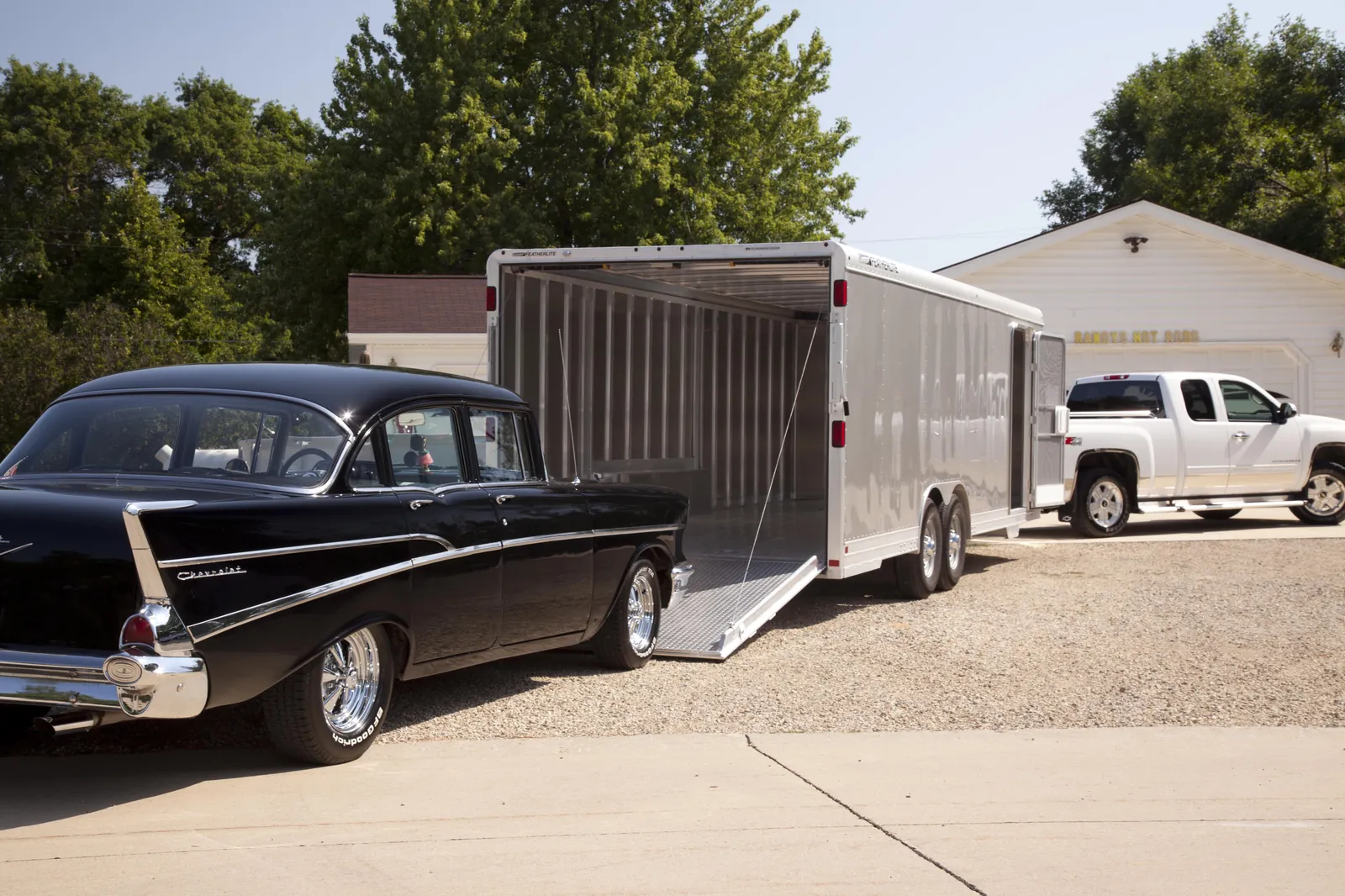
Everything a collector should know before shipping a classic, from choosing enclosed transport to handling a non-running project car.
A classic is not just an older car
Shipping a classic, an antique or a collector vehicle differs from shipping a daily driver in three ways that matter: the finish is often irreplaceable, the mechanicals may be temperamental, and the value is frequently higher than the vehicle's appearance suggests. All three change how the move should be planned.
The vehicles we see most on this work are pre-war antiques, muscle cars with original numbers, restored survivors, and cars that have just come out of a long restoration. What they have in common is that a single chip or a fluid leak on someone else's paint is not a small problem.
Enclosed transport, and when open is defensible
Enclosed is the default recommendation for a classic, and for good reason: it removes road debris, weather and public visibility in one step. The premium reflects fewer vehicles per trailer, scarcer equipment and higher insurance requirements.
Open transport is defensible for a driver-quality classic that already lives outdoors, is insured at a modest value, and is being moved a short distance in settled weather. It is not defensible for a show car, a fresh restoration or anything with an irreplaceable finish. If you would be unhappy about one stone chip, the question answers itself.
Non-running and partially restored vehicles
A great many classics do not start reliably, and that is entirely normal on this work. What matters is telling us before the driver is assigned, because a non-running vehicle needs a winch and a driver equipped and willing to use one.
Be specific about the condition. There is a real difference between a car that runs but should not be driven far, one that rolls and steers but will not start, and one that does not roll at all. Each needs different handling, and the third may need a lift-gate rather than a winch. A vehicle described as "not running" when it also will not roll or steer is the most common cause of a failed pickup on classic work.
Mention low ground clearance separately. Many classics and most restorations sit lower than a modern car, and standard ramps can make contact.
Documentation, photographs and coverage
Do more documentation than you would for an ordinary vehicle, because with a classic the baseline is the whole argument.
- Photograph the car thoroughly in good light before it is loaded, including existing marks, the undercarriage if you can, and the interior.
- Walk the car with the driver and make sure every existing mark is written onto the Bill of Lading. That document is what a claim rests on.
- Check the coverage against the value. Your vehicle travels under the assigned carrier's cargo insurance. Coverage varies by carrier and load, so ask what the assigned carrier's certificate actually says before the vehicle is collected, and tell us the vehicle's value at booking so we can match it to a carrier appropriately.
- Inspect again at delivery, in daylight, and note anything new before you sign.
Preparing a classic for transport
- Leave about a quarter tank. Enough to load and unload, not enough to add meaningful weight.
- Secure or remove loose trim, hubcaps, mascots and anything that could vibrate free.
- Disable an aftermarket alarm, or it will drain the battery mid-route.
- Note any fluid leaks so the driver can position the car appropriately on the trailer.
- Fold in or remove aftermarket mirrors and antennae where they are removable.
- If the car has a soft top, make sure it is properly secured.
Neptune arranges classic car transport nationwide in the 48 contiguous states. We do not arrange sea freight or international shipping, so a classic leaving the country needs a specialist freight forwarder instead.