
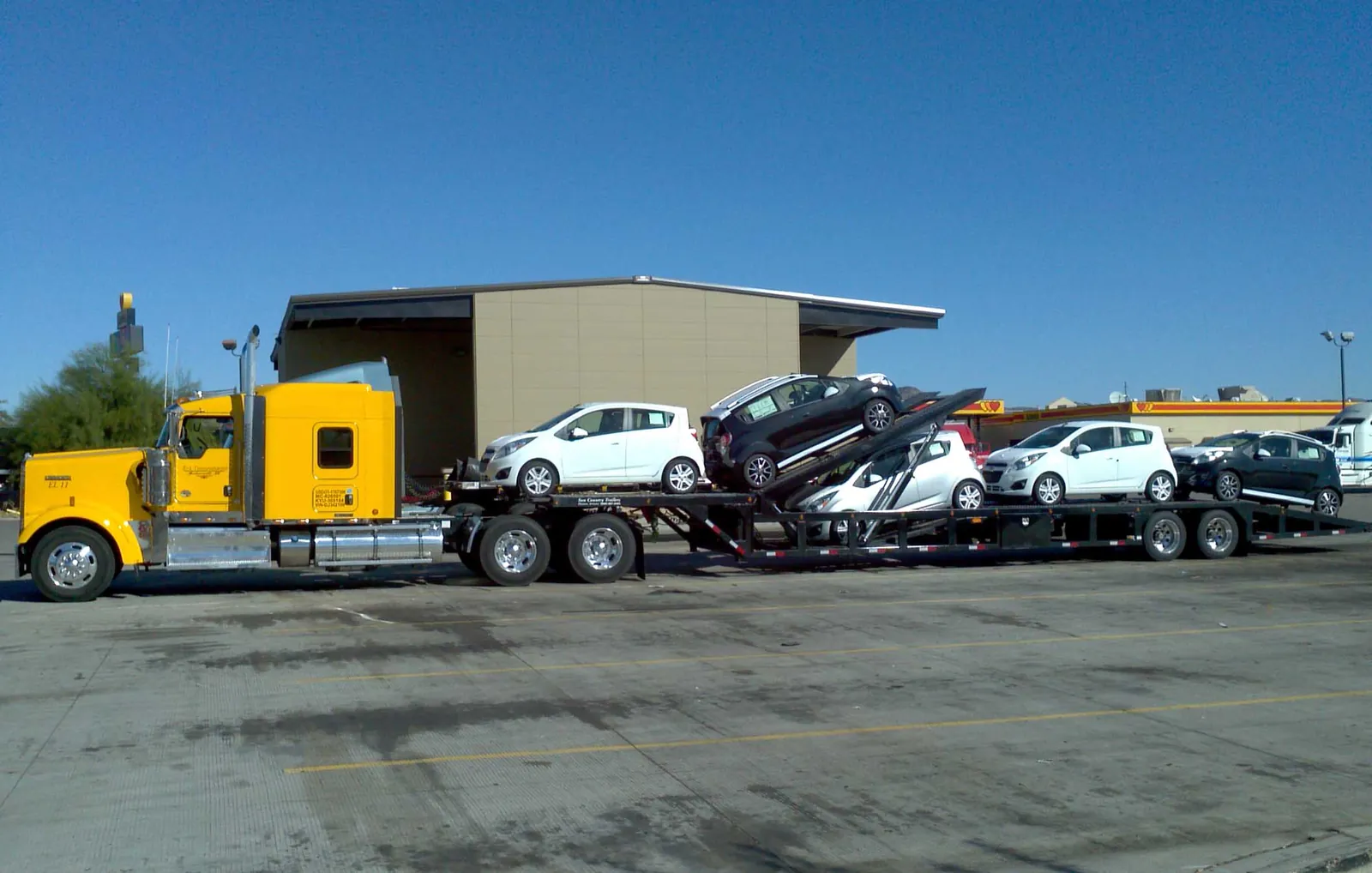
A buyer's guide to getting an online or out-of-state purchase delivered safely to your driveway.
Buying online means the transport is your problem
Buying a car remotely, from a dealer in another state, a marketplace listing or an online auction, removes the drive but adds a logistics step most buyers have never handled. The seller's job usually ends when the vehicle is released. Everything after that is yours to arrange.
The part that catches people out is timing. Auction houses and many dealers apply storage fees after a short free period, so a vehicle that sits waiting for transport starts costing money before it has moved an inch.
Before you pay: what to confirm
- The exact pickup address and hours. A dealership with evening hours and a dedicated lot is straightforward. An auction compound with restricted gate hours and a release process is not, and the driver needs to know which he is walking into.
- Who releases the vehicle, and what documentation the driver must present. Auctions in particular will not release to a driver who is not named correctly on the gate pass.
- Whether it runs, steers and brakes. Online listings are frequently optimistic. A vehicle sold "as-is, started last week" may need a winch, and that changes which carrier can take it.
- The keys. Confirm that keys will be with the vehicle. A car with no keys cannot be steered onto a trailer and needs different handling.
- The free storage window. Ask when fees begin, then book transport to fit inside it rather than after it.
Coordinating pickup with a seller who is not you
The single biggest difference from a normal move is that the person releasing the vehicle has no stake in your timeline. That is worth planning around.
Give us the seller's or the lot's direct contact at booking, not just the address, so the driver can coordinate release directly rather than through you. Tell the seller a pickup window is coming, not a fixed time, so nobody is surprised. And if the lot has gate hours, say so at booking: a driver arriving at five past closing loses the whole day.
Where the vehicle is at an auction, dealer or storage yard rather than a home, that is usually an easier pickup rather than a harder one, because these are places carriers already visit and the access is built for trucks.
Inspect on arrival, carefully
You have most likely never seen this vehicle in person. That makes the delivery inspection more important than usual, and it also makes it more complicated, because you are trying to separate two different things: damage in transit, and the condition the car was actually sold in.
Ask the seller or the auction for photographs taken at release, and compare them with the condition report on the Bill of Lading at pickup. If those two agree, anything new at delivery is a transit matter and the signed condition reports at both ends are the evidence. If they do not agree, that is a conversation with the seller, not with the carrier.
Inspect in daylight, walk the whole vehicle before signing, and note anything new on the delivery paperwork. Your vehicle travels under the assigned carrier's cargo insurance, and we can supply the Bill of Lading, the dispatch sheet and the contract to support a claim.
Booking transport for an online purchase
- Book as soon as the sale is confirmed, not when the paperwork clears. The pickup window runs two to five business days from booking.
- Give the vehicle's real condition, not the listing's description.
- Ask about expedited transport if storage fees are close.
- Flag a lowered, lifted or non-running vehicle explicitly.
Neptune arranges dealer and auction transport nationwide, and this is routine work rather than an exception.