
Why larger vehicles cost a little more to ship, and how to transport an SUV, pickup or lifted truck without overpaying.
Bigger vehicles take more of the truck
A car carrier is constrained by two things at once: deck length and total weight. A full-size pickup or a three-row SUV uses more of both than a sedan, and the space it takes is space the carrier cannot sell to anyone else. That is the whole reason larger vehicles price higher, and it is why the premium is a share of the load rather than a flat surcharge.
Across Neptune's own dispatch records the gap is smaller than most people expect. The median pickup runs modestly above the median car or SUV, not double it. For the actual bands, see our car shipping cost guide, which publishes figures from those records rather than an industry average.
Lifted, lowered and modified vehicles
Modifications matter more than size on their own, because they change which trailers can physically take the vehicle.
- Lift kits and oversized tires add height. A vehicle that will not clear the upper deck has to travel on the bottom, which reduces the carrier's options and can mean waiting for the right trailer.
- Lowered suspension and front splitters are the opposite problem. Standard ramps may not clear them, and the driver needs a lift-gate or extended ramps to load without contact.
- Roof racks, light bars and bed toppers all add height that has to be counted, not estimated.
- Dual rear wheels and long-bed configurations change both length and weight.
None of this is a problem when we know at booking. All of it is a problem when the driver arrives to a vehicle that does not match the order, because the load was planned around the vehicle described. Measure if you are unsure, and tell us the real numbers.
RVs, motorhomes and oversized loads
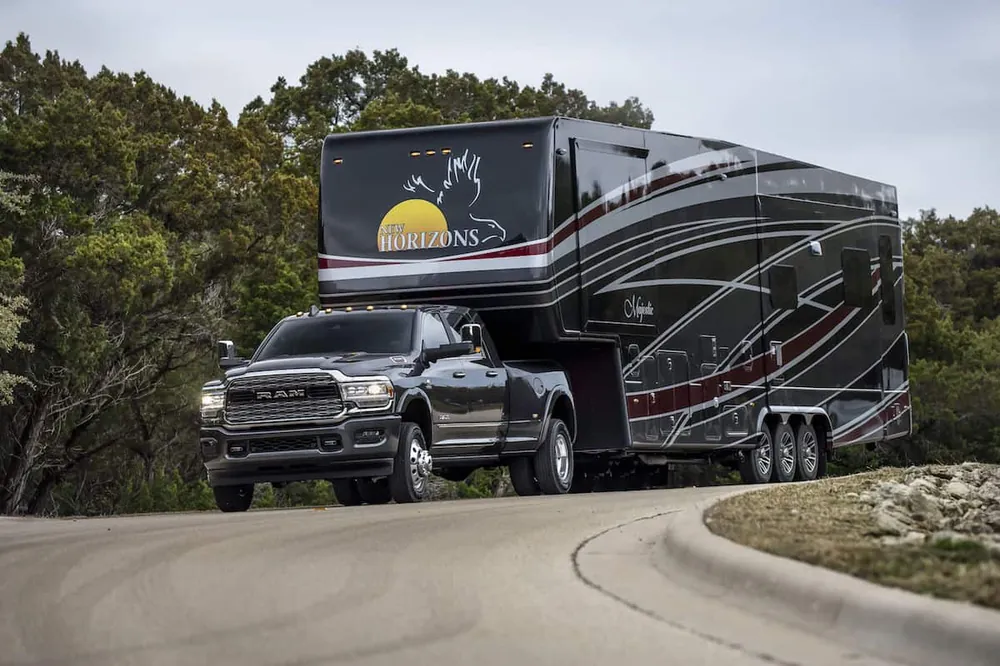
Oversized transport is a different discipline from car shipping, not a bigger version of it. RVs, motorhomes, fifth wheels and travel trailers move on flatbeds, step-decks or specialised trailers depending on dimensions and weight, and the equipment is scarcer than standard car carriers.
Two things drive the plan. First, permits and routing: over-height or overweight loads often require state permits and designated routes, and those vary state by state along the corridor. Second, whether the unit is drivable or towable, which decides the handling entirely.
Share the full dimensions and weight up front, including height with anything mounted on the roof. An accurate plan built from real measurements is what keeps an oversized move from stalling halfway.
Open or enclosed for trucks and SUVs
Most large vehicles ship open, and that is usually the right call. Open carriers are the same equipment dealers use to move new inventory, there are far more of them, and that means shorter pickup windows.
Enclosed is worth considering for a lifted show truck, a restored classic pickup or anything where the finish is the point. Be aware that height is the constraint: many enclosed trailers have less interior clearance than an open top deck, so a tall vehicle can be harder to place enclosed than open. Tell us the height early if you are set on enclosed.
Getting an accurate quote for a large vehicle
- Give the year, make, model and trim, since trim often decides the dimensions.
- List every modification, including ones you consider minor.
- Confirm whether it runs, steers and brakes. A non-running vehicle needs a winch and a driver equipped to use it.
- Give the real height if anything is mounted above the roofline.
- Say whether either address has a low bridge, a tight turn or a weight-restricted road.
Your vehicle travels under the assigned carrier's cargo insurance, and we confirm that coverage before it is loaded.