Every customer asks it: can I leave my stuff in the car? Here's exactly what the rules say, why carriers limit personal items, what you can and cannot pack, and how to protect what matters most.
The short answer
Yes — you can pack a limited amount of personal items inside your car during auto transport, but only under specific conditions. Most carriers allow up to 100 pounds of items stored in the trunk or cargo area, kept below the window line, and secured so nothing shifts during transit. Anything beyond that is either prohibited, uninsured, or both.
The key thing to understand is that auto transport is not a moving service. The carrier's job is to move your vehicle safely from point A to point B — not to haul household goods. When you treat your car like a moving truck, you introduce risk for yourself, the driver, and sometimes other vehicles on the same carrier.
What the FMCSA says about personal items in shipped vehicles
The Federal Motor Carrier Safety Administration — the agency that regulates interstate auto transport — does not publish a single black-and-white rule that says "you may pack X pounds." Instead, the FMCSA sets the framework: carriers are responsible for the safe transport of the vehicle they have contracted to move. Personal items inside the vehicle are not part of that contract unless the carrier explicitly agrees to them.
In practice, this means every carrier sets their own policy. Most follow the industry-standard guideline of 100 pounds or less, in the trunk only, below the window line. But some carriers prohibit personal items entirely, and enclosed transporters almost always require the car to be empty. The FMCSA's broader point is clear: cargo insurance covers the vehicle, not your suitcase.
Why carriers limit what you can pack
It is not arbitrary. There are three real reasons behind carrier restrictions on personal items:
Weight adds cost. Every extra pound on a car carrier burns more fuel. Over hundreds or thousands of miles, even 100 extra pounds per vehicle — multiplied by seven or eight cars on a single carrier — adds up to real money. Carriers price their quotes based on the vehicle, not on a vehicle-plus-household-goods combo.
Loose items become projectiles. An 80,000-pound car carrier hitting a pothole at highway speed does not ride like a passenger car. Items that are not factory-secured shift, slide, and bounce. A heavy box in the back seat can slam into a window. A loose object under the brake pedal can become a genuine safety hazard when the driver needs to load or unload.
Insurance does not cover it. Carrier cargo insurance covers damage to your vehicle caused by the carrier. It explicitly excludes personal belongings. If your laptop breaks, your suitcase gets stolen, or your grandmother's china shatters, the carrier's insurance will not reimburse you — and in most cases, neither will the carrier.
How much weight can you actually leave inside?
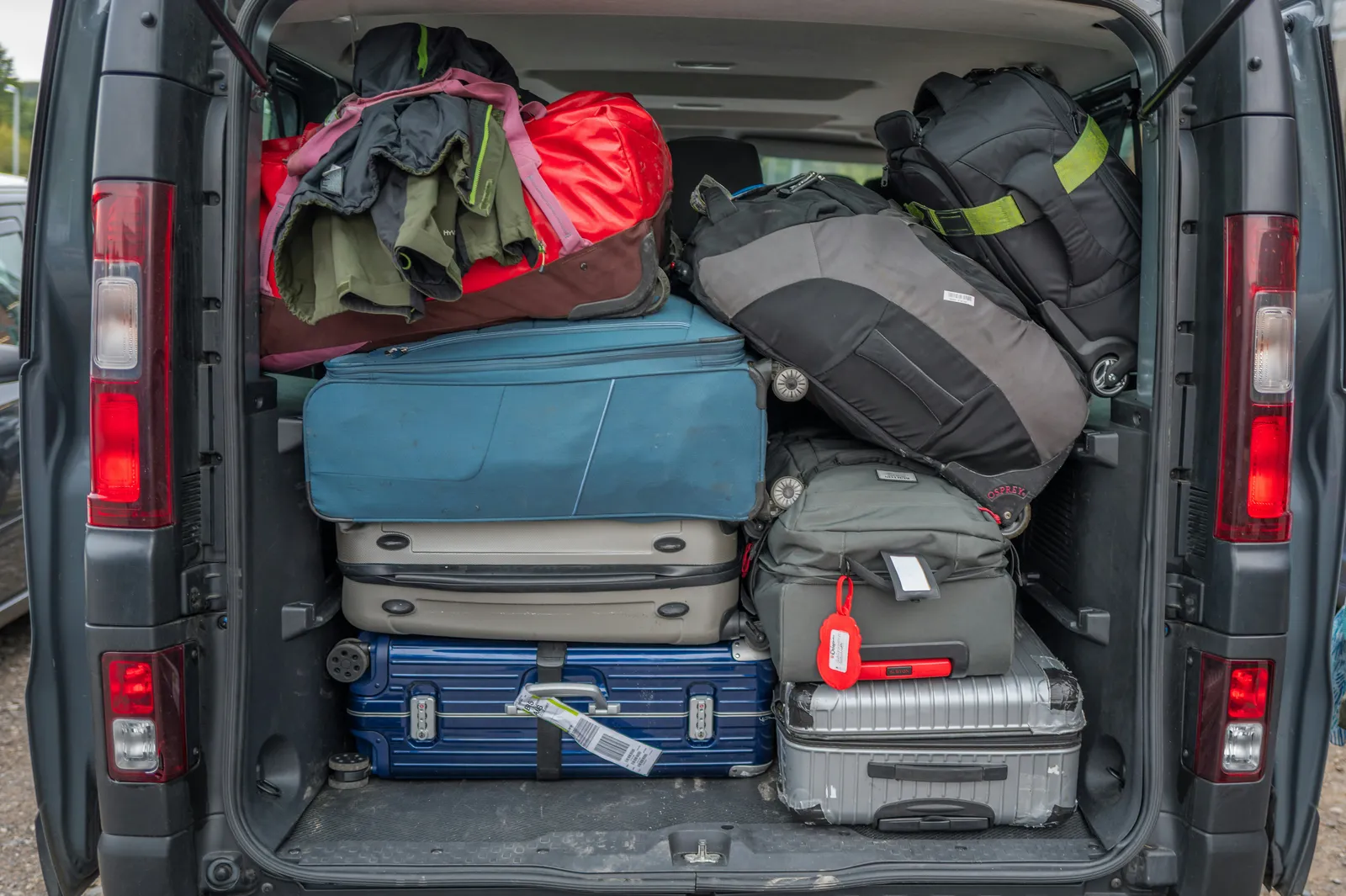
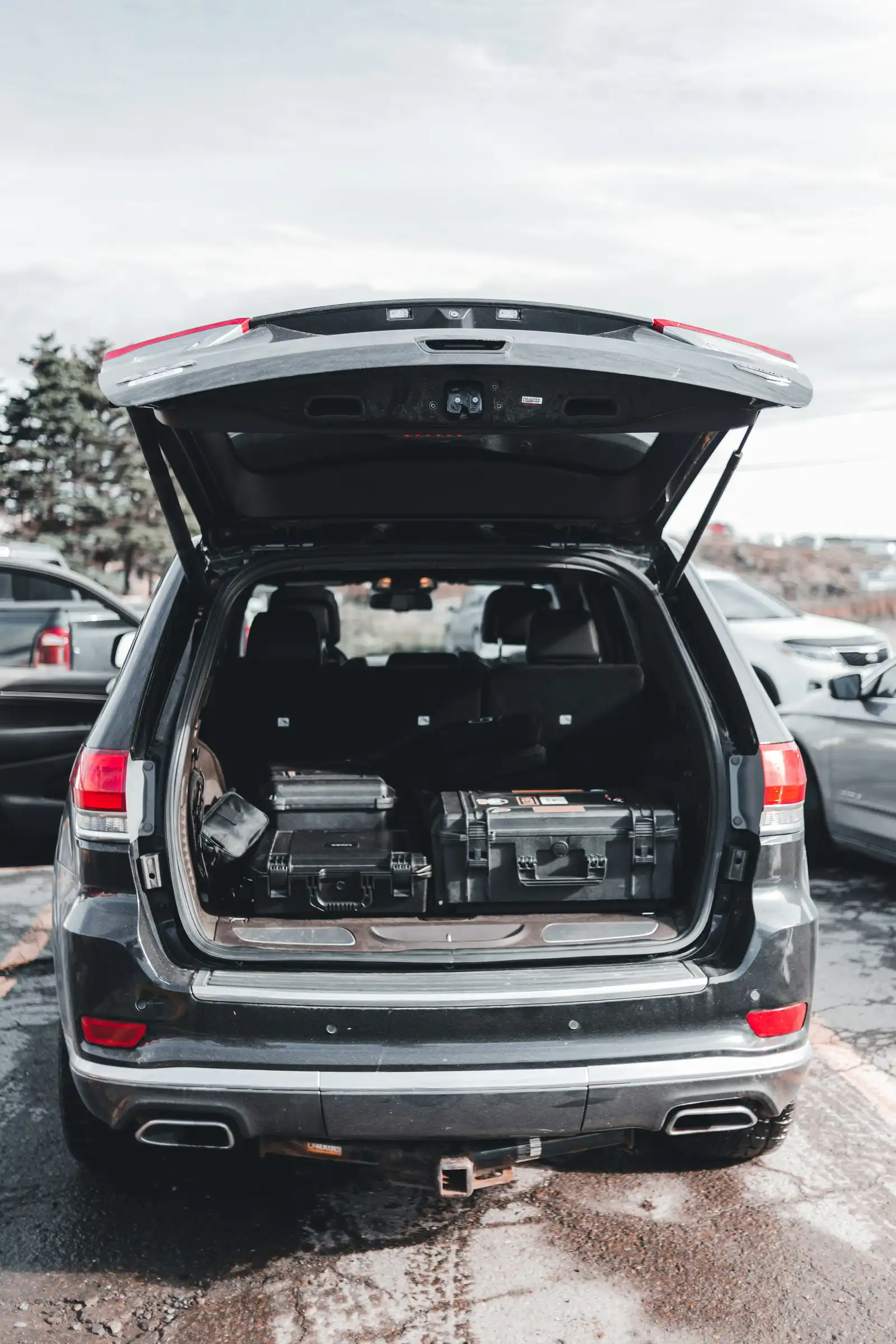
The industry-standard answer is up to 100 pounds total, stored in the trunk or cargo area, and kept below the window line so the driver has an unobstructed view when loading and unloading the vehicle. That is roughly the weight of a medium suitcase or two small duffel bags — not a trunk full of moving boxes.
Some carriers set a lower limit — 50 or 75 pounds — and a growing number prohibit personal items entirely, especially on long-haul routes or enclosed transport. The safest approach is to ask your auto transport specialist for the specific policy of the carrier assigned to your shipment. At Neptune Auto Transport, we confirm this with you before pickup so there are no surprises.
If you are shipping a car across the country, the weight of personal items can also affect your quote. A vehicle loaded with 150 pounds of extra cargo changes the carrier's weight calculation and may trigger a surcharge — another reason to pack light.
Items you can typically pack inside your car
Not everything is off-limits. Carriers generally accept soft, lightweight, low-value items that stay put and do not block the driver's view. Here is what most carriers will allow:
- Clothing and linens. Folded clothes, blankets, pillows, and towels are the safest and most accepted category. Pack them in soft duffel bags, not hard-sided suitcases, so they compress and do not rattle.
- Baby and child items. Car seats, strollers (folded), and diaper bags are typically fine. These are everyday essentials that families often need immediately at their destination.
- Emergency roadside kit. Your factory spare tire, jack, jumper cables, and first-aid kit should stay with the vehicle — the driver may need them.
- Floor mats and factory accessories. These are part of the vehicle and should remain in place.
- Small amounts of non-perishable food. Sealed, unopened snacks are generally fine. Nothing that can spill, melt, or attract pests.
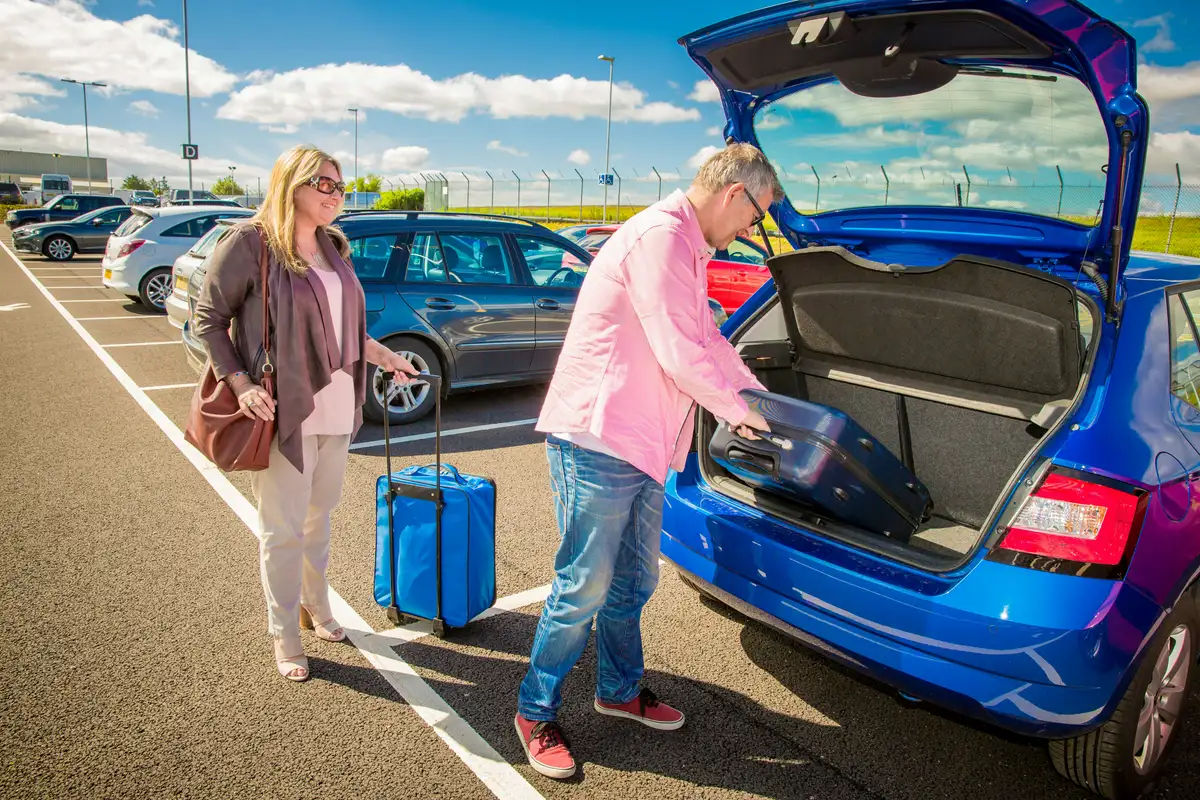
Items you should never pack inside your car
Some items are outright prohibited by every reputable carrier. Others are not explicitly banned but are a terrible idea because they are uninsured, fragile, or dangerous. Here is what should always come out of the car before pickup:
- Valuables. Jewelry, cash, credit cards, checkbooks, passports, and important documents. If you would be devastated to lose it, do not pack it.
- Electronics. Laptops, tablets, phones, cameras, GPS units, and gaming consoles. Heat inside a closed vehicle on a carrier can easily exceed 120°F, and vibration is constant. Electronics are not designed for those conditions — and they are not insured.
- Fragile items. Dishes, glassware, picture frames, mirrors, lamps, and collectibles. The vibration of highway transit will find every weak point.
- Hazardous materials. Gasoline cans, propane tanks, aerosol sprays, paint, cleaning chemicals, ammunition, and fireworks. These are federally prohibited on commercial carriers and can get your shipment rejected at pickup.
- Firearms and weapons. Federal law prohibits transporting firearms across state lines in a commercial carrier without proper declarations and licensing. Remove all firearms before shipping.
- Perishable food and liquids. Anything that can spoil, leak, or attract insects or rodents. A spilled gallon of milk in a hot car on a week-long cross-country trip is a disaster you do not want to open the door to.
- Plants. Many states have agricultural restrictions on transporting plants across state lines. They can also wilt, spill soil, and attract pests.
If you are preparing your car for shipping, removing these items is step one of a thorough checklist that protects your vehicle and your peace of mind.
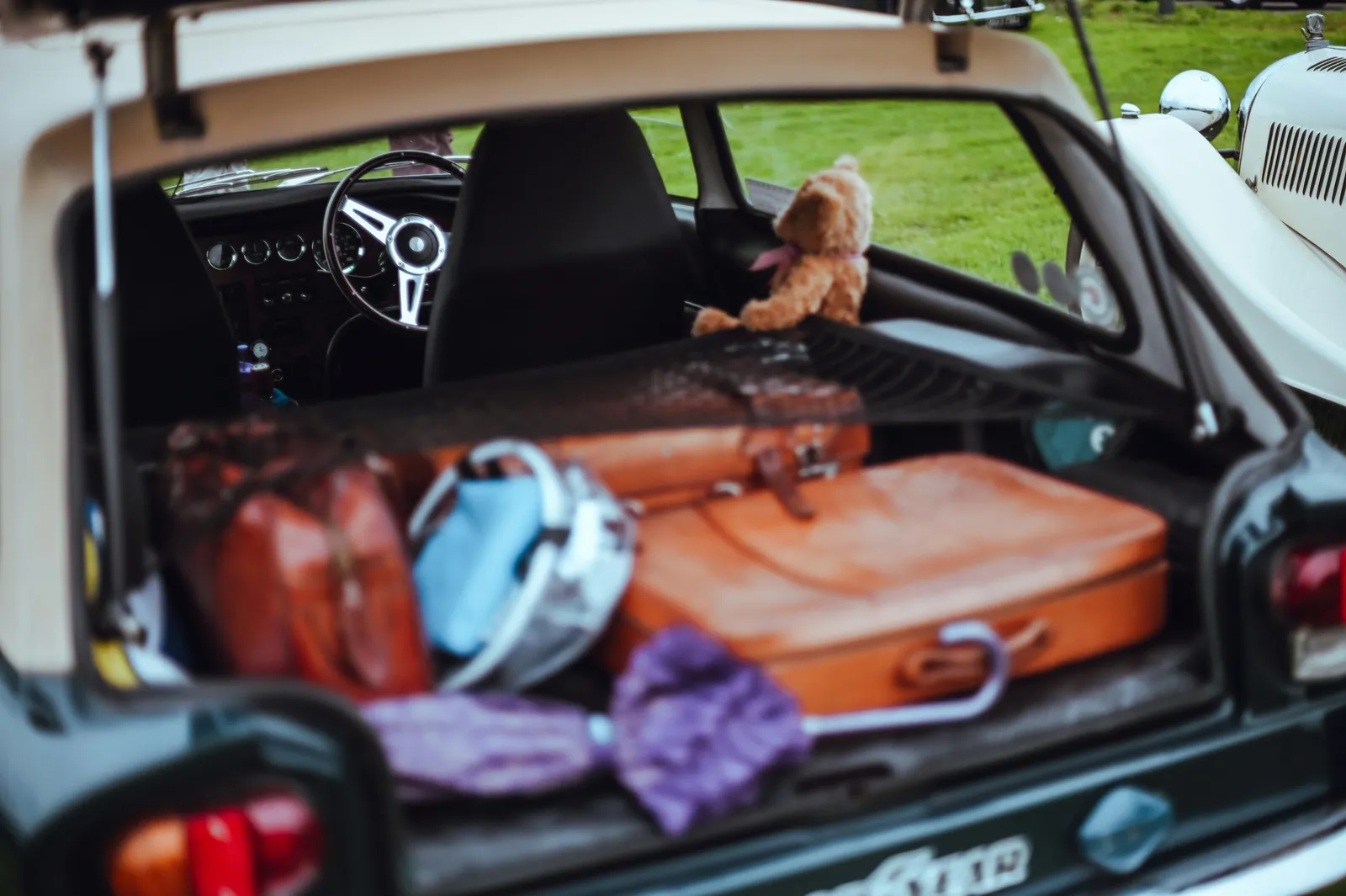
Insurance and liability: what is actually covered
This is the section that surprises most customers. Personal items inside your car are not covered by the carrier's cargo insurance — period. If your suitcase is stolen from the trunk at a stop, your tablet is damaged by heat, or your moving boxes crush each other during transit, there is no claim to file. The carrier's insurance covers damage to the vehicle caused by the carrier's handling, not loss or damage to your belongings.
Some personal auto insurance policies extend limited coverage to personal property inside the vehicle, but this varies widely by provider and policy type. Homeowners and renters insurance may also provide off-premises coverage for personal property, but you should check the specific terms — many policies exclude property in transit or have sub-limits that cap reimbursement well below the value of what you packed.
If you are concerned about auto transport insurance, the right time to ask questions is before pickup — not after you discover a broken laptop. And if you are shipping a high-value vehicle through enclosed auto transport, expect the carrier to require the car to be completely empty.
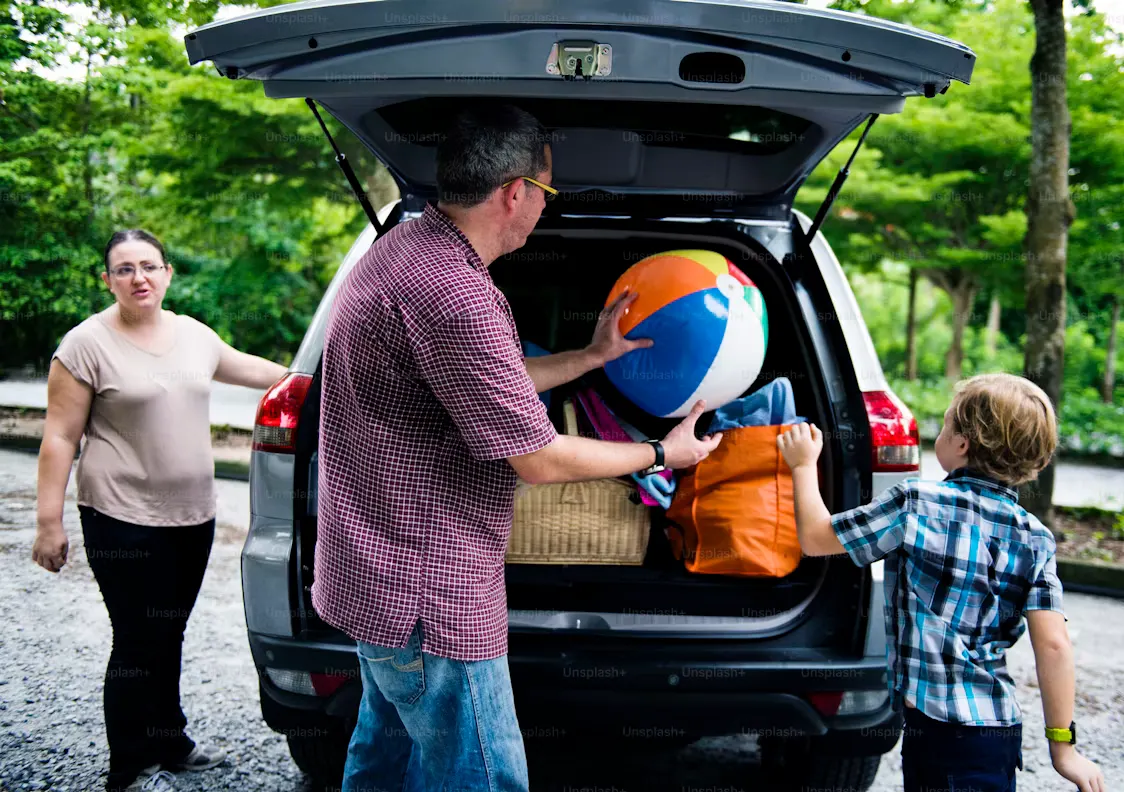
How to secure your belongings for transport
If your carrier has approved a small amount of personal items, securing them properly is your responsibility — and it matters more than most people realize. Here is how to do it right:
- Use soft bags, not boxes. Duffel bags and soft-sided luggage compress and absorb vibration. Cardboard boxes collapse, tear, and slide.
- Pack everything in the trunk or cargo area. The passenger cabin is visible, tempts theft at rest stops, and items in the back seat can fly forward during sudden braking or loading maneuvers.
- Keep it below the window line. The driver needs a clear sightline through the vehicle to safely drive it on and off the carrier. If items block the rear window or side windows, the carrier may refuse to load until they are removed.
- Use tie-downs or cargo nets for larger items. A stroller or folded car seat should be strapped down so it cannot roll. Even in the trunk, movement can scratch interior panels.
- Separate and label what stays vs. what goes. Before the driver arrives, put everything that stays in the trunk and everything that goes with you in a separate bag. This prevents last-minute confusion during the pickup inspection.
- Do not block the spare tire or emergency kit. If the driver needs the spare during transit, blocked access causes delays and potential fees.
For door-to-door auto transport, where the carrier comes directly to your home, having your items already packed and organized before the driver arrives makes the pickup process fast and professional.
Step-by-step packing checklist before pickup
Use this checklist in the 24 hours before your scheduled pickup. It ensures you have not missed anything and eliminates stress on the day:
- Confirm the carrier's personal-item policy with your transport specialist. Get the specific weight limit and any restrictions in writing.
- Remove all prohibited and valuable items. Electronics, important documents, cash, jewelry, firearms, hazardous materials, and anything fragile.
- Pack approved items in soft bags. Clothes, linens, and baby items go in duffel bags — not boxes, not hard suitcases.
- Weigh your packed items. Use a bathroom scale. Stay well under the carrier's stated limit. If they say 100 pounds, aim for 70–80.
- Load everything into the trunk or cargo area. Nothing in the passenger cabin. Nothing on the seats. Nothing blocking windows.
- Secure loose items with cargo straps or a net. If it can roll, it will roll. Tie it down.
- Remove or disable toll transponders. You do not want to be charged for tolls along the carrier's 2,000-mile route.
- Take photos of the packed trunk. Snap a few clear shots of how everything is arranged — this is your reference if something shifts.
- Keep a separate bag of essentials with you. Medications, a change of clothes, chargers, and anything you need immediately at your destination.
- Be present at pickup. Walk through the inspection with the driver. Point out your packed items and confirm they meet the carrier's requirements.
Following this checklist — combined with a thorough vehicle preparation routine — gives you a smooth, problem-free shipment.
Open vs. enclosed transport: different packing rules
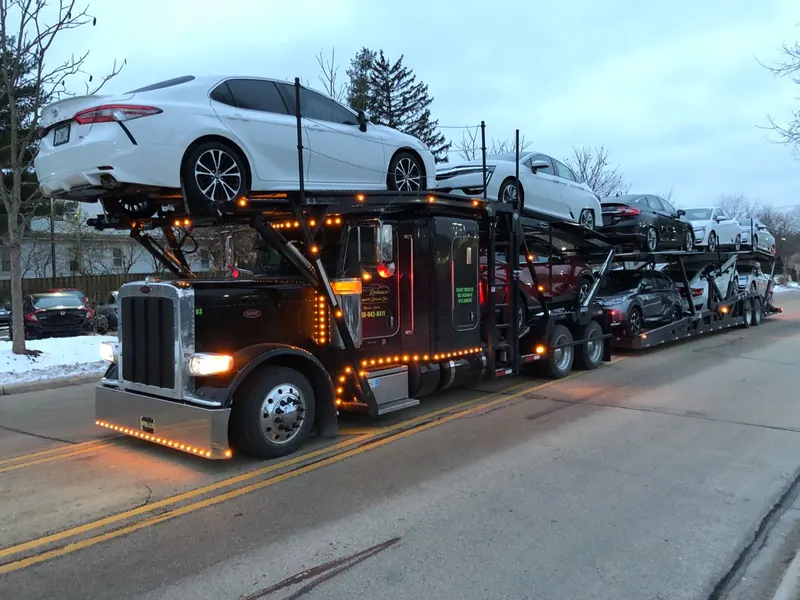
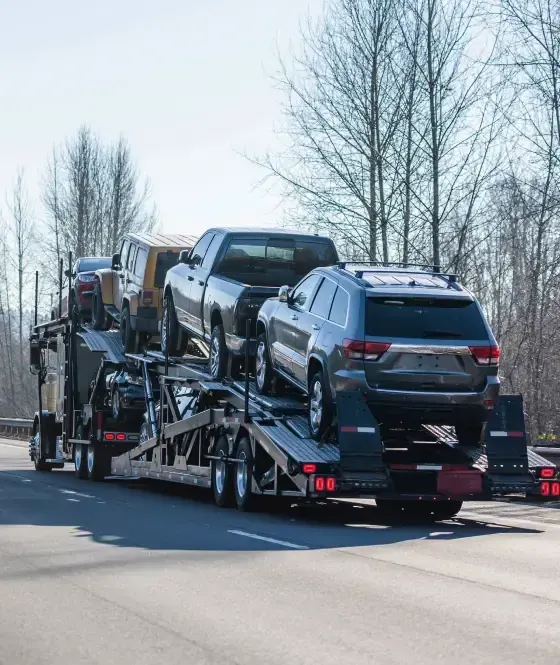
The type of transport you choose affects what you can pack. Open carrier transport — the standard multi-car hauler you see on highways — is generally more flexible. Most open carriers allow the 100-pound guideline, with items in the trunk below the window line.
Enclosed auto transport is a different story. Enclosed carriers transport high-value vehicles — luxury cars, exotics, classics, and collector vehicles — in a fully covered trailer. The tolerances inside an enclosed trailer are tighter, and the vehicles being transported are worth far more than the average daily driver. Because of this, most enclosed carriers prohibit personal items entirely. A stray suitcase shifting against a $300,000 Lamborghini's paint is not a risk any enclosed carrier is willing to take.
If you are shipping a luxury or classic vehicle, plan on shipping it empty. The extra protection of enclosed transport is designed for the car — not for your luggage. For more on this, read open vs. enclosed auto transport: which should you choose?
What to do instead: separate your move from your car shipment
The cleanest solution — and the one we recommend to every customer — is to separate your vehicle transport from your household move entirely. Ship the car empty through a professional auto transporter, and send your personal belongings through a dedicated moving company, a portable storage container, or a parcel carrier.
Here is why this approach works better:
- Everything is insured. Moving companies insure your household goods. Auto carriers insure your vehicle. No gray areas.
- No weight surcharges. Your car ships at its actual curb weight, keeping your quote accurate.
- No rejected pickups. The carrier never has to refuse your car because of what is inside it.
- Faster loading and unloading. An empty car is faster to inspect, faster to load, and faster to release at delivery.
If you are moving cross-country or shipping a car as a snowbird, coordinating your auto transport alongside a separate household shipment is the most efficient approach. Neptune can help you plan the timing so both arrive when you need them.
Not sure what you can pack?
Every carrier is different. Call or quote with Neptune and we will confirm your carrier's exact personal-item policy — before you pack a single bag.
Frequently Asked Questions
Final thoughts
Packing personal items inside your car during auto transport is possible — within limits. The 100-pound guideline, trunk-only storage, and the rule of keeping everything below the window line are the industry standards that make it work. But those standards exist for good reasons: weight, safety, and insurance.
The smartest approach is to treat auto transport as vehicle transport — not as a moving service. Ship the car empty or with only the bare essentials. Send your household goods through a dedicated mover. That way, your car is safer, your belongings are insured, and your shipment goes smoothly from pickup to delivery.
At Neptune Auto Transport, we help customers navigate these questions every day. Whether you are moving across the country, heading south for the winter, or shipping a car to college, we will confirm your carrier's exact policy on personal items and make sure you are fully prepared before the truck arrives.
Ready to ship? Get a free, no-obligation quote in under a minute — or call us at (929) 566-5872 and a specialist will walk you through every detail, including what you can (and cannot) pack.