
The real factors behind car shipping prices, typical cost ranges by distance, and practical ways to pay less without risking a bad experience.
What actually determines car shipping cost
The single biggest question every customer asks is also the hardest to answer in one number: how much will it cost to ship my car? The honest answer is that it depends on a handful of clear factors. Once you understand them, the pricing stops feeling like a mystery and starts making sense.
The main drivers are distance, vehicle size and weight, transport type (open or enclosed), the time of year, your route's popularity, and how flexible your dates are. Each of these nudges the price up or down, and together they explain almost every quote you will receive.
Distance: the foundation of your price
Distance is the largest single factor, but not in the way most people expect. While longer moves cost more in total, the cost per mile actually drops as distance increases. A 200-mile move might run well over a dollar per mile, while a 2,500-mile cross-country haul can fall below sixty cents per mile.
That is because long routes are more efficient for carriers, and short local moves carry fixed costs (pickup, loading, paperwork) spread over fewer miles. So while a coast-to-coast shipment has the highest total price, it is often the best value per mile you will find.
Vehicle size, weight and condition
Bigger, heavier vehicles cost more to ship because they take up more room and weight on the carrier, leaving less space for other cars. A compact sedan is the cheapest to move; a full-size truck, SUV or van costs more; oversized or lifted vehicles cost more still.
Condition matters too. A non-running (inoperable) vehicle requires special equipment like a winch to load, which adds to the price. Always tell your transporter if your car does not run so the right carrier is dispatched.
Open vs enclosed transport
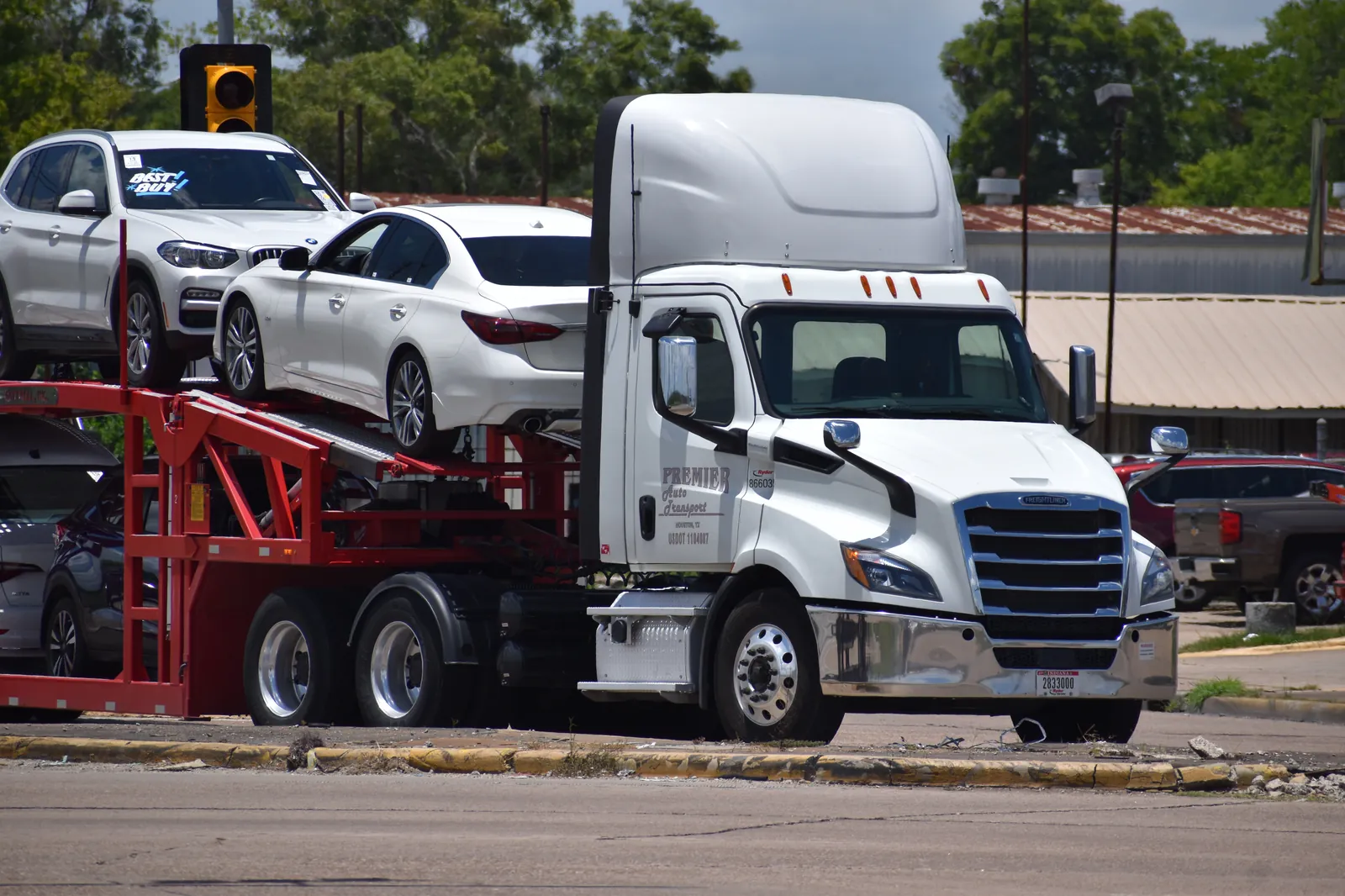
Open transport — the standard multi-car carrier — is the most affordable option and is perfectly safe for everyday vehicles. Enclosed transport, which fully covers your vehicle, typically costs 30–50% more and is worth it for luxury, exotic and classic cars that warrant full protection.
For most standard vehicles, open transport offers the best value. The premium for enclosed is really about protecting high-value or irreplaceable vehicles from weather and road debris.
Season and timing
Auto transport has busy seasons. Summer is peak moving season, and the snowbird migrations (south in fall, north in spring) create predictable demand surges on North–South routes. When demand is high, prices rise.
Your flexibility is a lever you control. Offering a wider pickup window almost always lowers your price, because it lets carriers fit your vehicle into an efficient route. Demanding a specific day or a rush pickup raises it.
How to save on car shipping
You can meaningfully reduce your cost without gambling on quality. Book one to two weeks ahead rather than at the last minute. Keep your pickup dates flexible. Choose open transport unless your vehicle truly needs enclosed. Ship to and from accessible locations near main routes. And compare quotes — but be wary of any price far below the rest.
A suspiciously low quote is the most common rookie mistake. In auto transport, the quoted price is essentially a bid to carriers. Price too low and no carrier accepts the load, so your car sits for days or weeks. A fair-market quote is what actually gets your vehicle picked up and delivered on time.
Getting an accurate quote
The best way to know your real cost is to get a quote tailored to your exact vehicle, route and timing. At Neptune Auto Transport, we provide a single all-inclusive price with no hidden fees — what we quote is what you pay. Reach out with your details and we will give you an honest number and explain exactly what drives it.
Frequently asked questions
What is the average cost to ship a car?
It varies widely by route, but as a rough guide short moves can run several hundred dollars while cross-country shipments often range from roughly $900 to $1,600 for a standard vehicle on an open carrier. The best way to know your price is a quote based on your exact route, vehicle and dates.
Why are some quotes so much lower than others?
An unusually low quote often means the price is too low to attract a carrier, so the vehicle sits unassigned. A fair-market price is what actually gets your car picked up and delivered on schedule, so be cautious of outliers that seem too good to be true.
Does shipping a non-running car cost more?
Yes. Inoperable vehicles need special loading equipment such as a winch, which adds to the price. Always disclose that a vehicle does not run so the right carrier is dispatched.